Wednesday, August 13, 2008

The Good Bad News: Gastric Ulcers in Equines


"We have our answer," Aaruba's vet announced when I answered the phone. "He has ulcers."


I sighed in relief. "Good!"


Ummm...Why am I so pleased that my beloved horse has lesions in the lining of his stomach?


Well, the bad news is good news because it answers a lot of questions: Why has Aaruba suffered recurrent, mild colics? Why do I have such difficulty keeping weight on him, though he has access to hay 24/7? Why is he brilliant some days and lethargic others? Why does he sometimes fail to clean up his feed? Now we know.


It's also good news because ulcers are curable. Not cheap, but curable. This is a huge relief, as another possibility suggested was that of permanent parasite damage left over from Aaruba's youth.


You can't live among performance horses for long and not encounter one with gastric ulcers. Many sources claim that about 60% of equine athletes suffer from ulcers. The percentage of affected horses tends to rise with increased training and competition; at an estimated 90%, racehorses top the list for ulcer risk.


In equines, gastric ulcers are caused by excessive acidity in the stomach. A horse's stomach produces about 1.5 litres of acidic fluid per hour. Ideally, this acid is neutralized by the alkalinity of a horse's saliva. However, saliva is only produced when the horse eats.


Do you see where this is going? Horses that don't have constant access to forage are unable to follow their natural eating pattern of consuming small amounts of food at frequent intervals. Long periods without forage result in inadequate saliva production, which results in highly acidic gastric PH levels, which can result in gastric ulcers.


So, will offering your horse free-choice hay or pasture eliminate the possibility of ulcers? Unfortunately, no -- just ask Aaruba, who enjoys a free-choice, 60/40 grass/alfalfa mix. While constant or frequent access to forage dramatically decreases ulcer risk, other factors are also at play:


1) Stress. Whether the result of buddy-sourness, competition, travel, training, or other causes, stress increases gastric ulcer risk in horses, just as it does in humans. Some horses (Aaruba among them) are more prone to stress than others. Performance horses will, obviously, face stressors as an unavoidable part of their jobs.


2) Exercise. Research demonstrates that increased exercise equals increased ulcer risk in equines. The reason for this are unclear, though some suggest it is a combination of elevated stress levels and extended periods with limited feed intake.


3) Feed concentrates. Grains and other concentrated feeds stimulate increased stomach acid production. Obviously, this problem is exacerbated if the horse cannot follow his grain consumption with plenty of forage.


As you can see, the lives of many equine athletes are perfect recipes for the development of gastric ulcers. The problem is often overlooked, however, because the symptoms can be quite subtle. Here's what to look for:


1) Acute or recurrent colic symptoms, often mild and responsive to Banamine. This was a major tip-off in Aaruba's case.


2) Weight loss or persistent poor condition. This was Aaruba's other significant symptom -- despite access to abundant feed, he struggled to attain the fat layer appropriate for an endurance athlete. Some horses also show decreased hair coat quality.


3) Decreased appetite or a tendency to walk away from a half-finished meal.


4) Compromised performance. In hindsight, I believe many of Aaruba's less energetic workouts could be attributed to his ulcers.


5) Reduced manure output or, less commonly, diarrhea.


6) Attitude and behavior changes such as increased nervousness, irritability, or biting/mouthiness.


If these symptoms sound familiar, what should you do? Aaruba's vet offered two courses of action -- either have the horse scoped to determine conclusively whether ulcers are present, or simply medicate the horse and rely on the cessation of symptoms to give us an answer.


Easy choice, right? Not really. Scoping costs around $250 or $300, but the drug of choice, GastroGard, runs at least $28 per tube (I've heard of prices up to $75 per tube!) -- and the dosage for most horses is one full tube per day for 30 days. That's a lot to pay for medication you aren't sure your horse needs. It's true that horses may show signs of improvement after just a few days on GastroGard, but this is inconclusive as ulcer symptoms often come and go even in the absence of medication.


GastroGard can be purchased online for lower prices than you're likely to find at your local vet, but it does require a prescription. Non-prescription UlcerGard is the same drug (Omeprazole) labeled as a preventative medication rather than a cure. At first glance, UlcerGard appears less expensive than GastroGard; however, this is because the recommended dosage (for prevention) is 1/4 the dosage required to actually resolve existing ulcers. Using enough UlcerGard to cure ulcers costs about the same as using GastroGard, so I'm sticking with my vet's recommendation to order the name brand.


What about recurrence? Gastric ulcers can certainly recur after treatment, but preventative measures can be taken to keep an ulcer-prone horse like Aaruba healthy even during the stress of continued athletic endeavors. In addition to employing our usual management strategies to keep him as calm as possible, we'll keep Aaruba on preventative medication and remove all grain from his diet, replacing it with Purina Equine Senior.


Keep an eye on your horses, friends, and don't be afraid to delve into possible causes of that niggling concern. You might just get some good bad news of your own.
______________________________________________

Related Posts

Introduction: Equine Gastric Ulcer Series

Strategies for Prevention of Equine Gastric Ulcer Syndrome
Pharmaceutical and Alternative Treatment Options for Equine Gastric Ulcer Syndrome
Equine Ulcer Supplement Options
EGUS, Endurance, and the AERC
A Fair Question: Equine Athletes, Equine Ulcers
Bringing it Home: EGUS Prevention at In the Night Farm
Sheer Brilliance: Aloe and MSM as Alternative Therapy for EGUS
Q & A: Aloe and MSM as Alternative Therapy for EGUS

______________________________________________

Did you enjoy this post? We deliver!
Subscribe to The Barb Wire

____________________________


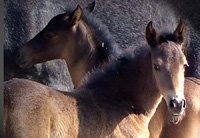
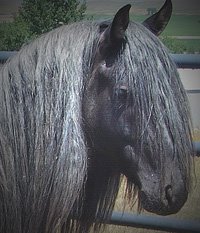
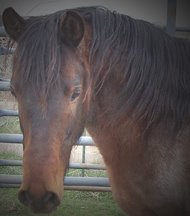
The photo accompanying this post is by equine sculptor Lynn Fraley. Be sure to take A Virtual Visit to Laf'n Bear Studio!

Tuesday, August 12, 2008

Dennis Lane Equine Back Profiling System, Take Two

Whew! I spent all weekend measuring horses, examining photos, and documenting results. The Dennis Lane system proved consistent and user-friendly, so after practicing on the Barbs, I felt prepared for the real deal: Aaruba.

Measuring Aaruba was serious business. He's the one getting the custom Stonewall endurance saddle, so I needed to get it right. Travis and I squared him up on the driveway and started through the now-familiar process.

First, I located the rear edge of Aaruba's scapula and drew a vertical line to mark the spot, known as "A". Next, Travis and I each made independent judgements regarding the lowest point of Aaruba's back. We discovered that there was about an inch-long section of spine, any part of which could be considered the lowest point. Fortunately, the Dennis Lane system can accommodate an inch of error on this particular measurement. We settled on the forward end of the inch in question and drew another vertical line, known as "B." Finally, we measured for a third vertical line, "C," eight inches behind "B."

We then used the profiling cards to determine ideal tree width at A, B, and C. Each profiling card has four, graduated sizes; all Aaruba's measurements fit within the narrowest set. Here, you can see how the S5 slot on the A card fits Aaruba's A mark. At B, Aaruba measured S6; and at C, S7.

At first, I was concerned because the S5 card didn't fit neatly over Aaruba's withers. However, Jackie Fenaroli of Stonewall Saddle Company explained that the saddle's generous gullet will easily accommodate such variations; the important thing is that contact between horse and card be equal on both sides of the short, black line on the wing of the card, because that line indicates where the horizontal center of the tree will rest on Aaruba's back. The horizontal lines you see crossing the vertical lines on Aaruba's back in the photo above correspond to the short lines on the cards.

Next, we needed to measure "rock." As you can see, the R card must line up with the horizontal marks along Aaruba's back. R6 is the flattest of the three "rock" cards, and Aaruba is on the verge of being even flatter.

Following instructions from Stonewall, I took photos of Aaruba from the side, and from above and behind. We also measured his height (15 hands) and recorded other pieces of information such as his age (6), gender (gelding), and use (endurance).

Finally, Travis and I used soldering wire to make a tracing of Aaruba's back. The lines on this graph paper represent the shape of Aaruba's back at three-inch intervals from withers to flank.

While I did paperwork, Travis and Aaruba tried on hats.

I've sent photos and measurements off the Stonewall so Jackie can check me for accuracy and advise me regarding anything I should re-do or double-check. Meanwhile, Aaruba is spending the day at Idaho Equine Hospital being scoped for gastric ulcers. Though he seems perfectly healthy 98% of the time, subtle symptoms and occasional, mild colics have us searching for an explanation. Cross your fingers for him!

_____________________________________

Related Posts

Upward in the Night

It's Here!: Dennis Lane Equine Back Profiling System

The Measure of a Horse: Dennis Lane Equine Back Profiling System, Take One

_____________________________________

Want to read more posts like this one? We deliver!

Subscribe to The Barb Wire

Saturday, August 9, 2008

The Measure of a Horse: Dennis Lane Equine Back Profiling System, Take One

Meet Ripple Effect.

This 2006 Jack Slade granddaughter by Jack's Legacy out of Alternating Current (aka Acey) is 25 months old, so she's a couple years away from needing her first Stonewall saddle. All the same, I wanted data on her back so I can observe how it changes over time; also, the information may be valuable to those who are compiling details about how Spanish Colonial horses' conformation compares to that of other breeds.


Ripple stood nicely for measuring and photos. I'm new to the Dennis Lane system, so I appreciated her patience while I drew chalk lines on her back, experimented with notched cards, re-read directions, mopped my forehead, started again.

Here are the results:

A: S4 (This means that if I were to order a custom saddle for Ripple today, the tree would, at the withers, match the narrowest profile in the Dennis Lane system.)

B: S7 (Again, a fairly narrow measurement at the lowest point of Ripple's back, the base of her withers. However, after talking with Fenaroli of Stonewall Saddle Company this evening about how to use the profiling cards properly, I wonder if this ought to be an even narrower S6. I'll have to double-check.)

C: S5 (This, too, is a narrow measurement near the 13th and 14th vertebrae, where the back of the saddle would rest.)

R: Flatter than R6 (The Dennis Lane system measures "rock" with a set of cards designed to determine the shape of the sides of the horse's back, horizontally, where the saddle's bars will rest. As a maturing horse, Ripple's back is flatter than the card with the least "rock."

S: 8 inches. (This is the distance between the lowest point of Ripple's back and the rearmost edge of her scapula.)

If the above makes no sense to you, but you're curious, visit the Dennis Lane website and scan the instructions. Or, just stay tuned to The Barb Wire blog for more profiling photos and results.

Sculptor Lynn Fraley of Laf'n Bear Studio will return to In the Night Farm later this morning to take more photos and video of the Barbs. A dedicated student of equine anatomy, she'll also join me in profiling at least one Barb's back.

By the way, I'm considering making Ripple Effect available for sale to the right person. If you're interested in this sweet filly, feel free to contact me via the email address in the sidebar at right.

_____________________________________

Related Posts

Upward in the Night

It's Here!: Dennis Lane Equine Back Profiling System

Dennis Lane Equine Back Profiling System, Take Two

_____________________________________

Want to read more posts like this one? We deliver!

Subscribe to The Barb Wire

It's Here!: Dennis Lane Equine Back Profiling System

The Dennis Lane Equine Back Profiling System has arrived from Stonewall Saddle Company! The cards came in a large, flat box via insured mail. The post office first attempted to deliver while I was at work, but thankfully, they tried again on Saturday. Our delivery lady was most amused by my enthusiasm.

Inside the box, I found the Dennis Lane profiling cards and everything I'll need to use them, from data sheets for all our horses to an equine measuring stick. Jackie Fenaroli, owner of Stonewall Saddle Company, even included chalk, a sharpened pencil, and a sample of the conformal foam that lines the tree of a Stonewall endurance saddle.


Note the presence of my furry assistant. I guess nobody told Souffle what curiosity did to the cat.

Jackie also included soldering wire, tape, pen and large sheets of graph paper so I can make tracings of Aaruba's back. Stonewall will use both sets of measurements to customize Aaruba's sponsorship saddle. I love this box of stuff -- how nice not to have to run around the house gathering incidentals!

In a few minutes, Travis and I will head outside to start measuring horses. Never having used the Dennis Lane System before, we'll practice on a horse other than Aaruba. Jackie invited me to measure all our horses while we have the cards -- even the two year old Barbs, so we can record how their backs change as they mature. Methinks Ripple Effect will be an excellent guinea pig for Take 1.

Friday, August 8, 2008

Making Lemonade

Oops.

After feeding the horses Tuesday evening, I accidentally left the hose running in Consolation and Acey's water tub. All. Night. Long.

By morning, the east side of my round corral -- conveniently located just downhill of Consolation and Acey's pen -- was flooded. This fact did nothing to improve my attitude Wednesday morning.

By Wednesday evening, the water had receded several feet, but four-inch deep puddles remained. That's when I remembered the old saying: When you do something stupid, make lemonade. Or something of that sort.

I took advantage of the oppor- tunity, rare in our high desert summer, to see how Consolation would react when asked to walk through water. As she grew up in a 200 acre pasture with a creek running through the middle, I didn't anticipate any drama. Sure enough, she walked right through. As you experienced trainers know, this was probably, at least in part, because I didn't expect any drama.

Consolation and I have been struggling in our relationship lately. We both want to be in charge, and we haven't quite found the route to that perfect 50/50 yet. So, we moved on to some team problem-solving exercises.

I built a tiny obstacle course of poles. We walked through forward several times in each direction, then backed through. I was pleased to find that all our lateral work paid off with several flawless runs.

Next, I upped the ante by putting a tarp in the path. Having worked over tarps before, Consolation walked through with only the slightest hesitation. Backing through, however, presented a bit more of a challenge. She didn't listen as well to my cues, eager as she was to hurry over that tarp. It took us a good eight tries to make a clean pass. By then, I felt she'd earned a few minutes of hand grazing out by the garden, so we called it quits.

Sometime soon, we’ll try all this again, under saddle...and without the flooded corral!

Sunday, August 3, 2008

Shot in the Dark: Gentleness


The power of gentleness is irresistible.

~ Henry Martyn

______________________________________________________
Want to read more posts like this one? Subscribe to The Barb Wire

Friday, August 1, 2008

Tickled Pink: 2008 Pink Flamingo Classic, Day Two

Want to read about Day One first? Click here.
_________

I woke to the horn blast at 5:00 a.m. Dawn lay cold and murky over ride camp. Condensation beaded on the tent walls, threatening to rain down upon me as I struggled to pull on riding tights and fleece while still in the warm confines of my sleeping bag.

On this second day of the ride, both horses and riders were more subdued. Fewer neighs rang through the meadow. Riders clutched coffee mugs, waved the 50-milers off with good luck wishes, carried on with the munching of bagels and saddling of horses as sunlight spilled down the hillside.

Aaruba stood alert but calm in his pen. Tacking took only a few minutes, as we'd decided to forego his Easyboots on Day 2. The earthen trails rendered boots quite unnecessary, and a gaiter rub from Day 1 was all the encouragement I needed to try this LD completely barefoot.

At the starting line, horses milled up and down, warming up, waiting for 7:30. Aaruba and I walked, then trotted amid the field of what seemed to be about 20 horses; not until that evening did I learn there were actually 45 horses in the race.

Aaruba was so mellow that we started down the trail almost as soon as it opened. Ten or twelve horses trotted ahead of us, led by a gaited stallion that wasn't actually entered in the race. This was the horse that had colicked Friday evening, and he was hotter than snot after spending Saturday pent up while his buddies raced. Apparently due to a misunderstanding of the vet's instructions to go ahead and ride 10 or 12 miles on Sunday, the rider took her horse along on the first loop of the LD instead of out with the trail riders.

The stallion set a raging pace along a rutted track that wound up the forested mountainside. Warmed up, full of air, charged by excitement and the still-cool air, Aaruba charged along among the close herd. Riders worked to settle into positions according to pace and preference, horses arched their necks and begged to run, some pairs passed while others fell back. I was impressed by the manners of this group, all of whom seemed to care for the safety of other horses and riders, but I was still glad to see the front runners disappear over a rise as the group strung out along the trail.

Having let Aaruba work out a little of his early energy, I asked him for a slower pace as we continued to climb. He fought a bit but complied, though at one point we were passed by a faster horse and I chose to dismount and lead Aaruba until he shut off his race brain and deigned to listen to me again. Back astride, I guided him through a cross-country section of trail, picking through stumps and forest litter at the head of a short line of riders also content to walk the tricky stuff.

When we reached better footing, we trotted again, still uphill, and caught up with the crowd clustered around the mile 5 water stop. (Mile 5 already?) Waiting for a turn at the tanks, I shed my fleece jacket and sponged Aaruba's neck and shoulders. Thankfully, he drank despite mild indignation upon being left behind as the front runners continued along the trail. We carried on alone, in a kind of bubble between groups of other riders, which is my favorite place to be.

At the mile 10 water stop, we caught up with a pair of riders who'd elected to give their mounts a grazing break. Aaruba still felt strong and full of air, so after a quick drink, we moved on. Soon, the trail turned downhill for the 5 mile journey into the hold. I've said before that Aaruba is a great downhill horse. We don't practice much during conditioning, as it's hard on the joints, but this was a perfect time to let Aaruba cruise along at a smooth but enormous trot, eating up trail at what must have been about 14 mph.

When ride camp came into view, I dismounted just as the horse in front of me spooked, dumping his rider over his shoulder. Thankfully, the rider was unhurt and we all walked in together. Aaruba pulsed down immediately, vetted through with all A's, and bounced happily down the trail at the end of our 1-hour hold. Little did he know that were were headed straight into the Pasture of Doom.

Our fluttering line of orange and white ribbons led us across a grassy meadow and into a cluster of scrubby trees. A pair of gaited horses passed us on a narrow section of trail, just as a small group of spotted calves came into view. Concentrating on steering, especially since one of the other horses had a red "kicker" flag in its tail, I failed to notice that the calves stood on the fringes of an entire herd of Carniverous Cows from Planet Horseflesh.

Aaruba's head flung skyward. His eyes bulged. His shoulder dropped in the frantic sidepass that precedes a bolt. I pulled one rein to my hip and dug a heel into Aaruba's ribs, disengaging his hindquarters long enough for me to jump off and avert a panicked charge across a field pockmarked by ground squirrel burrows. Whew!

Leading Aaruba past the cattle was not unlike rolling a keg of dynamite through a burning building, but we made it. As an added bonus, the gaited horses had disappeared up the trail, leaving us alone again. Aaruba's frayed nerves knit themselves back together as we left the cattle behind, and we set a brisk but controlled pace along the relatively level trail.

We caught the gaiters again at the water stop, which consisted of a wide creek with firm footing. Little did I know that said creek would later contribute to the Bad Day award, earned by another rider whose mount would spill her into the water! Aaruba waded in above his knees to splash and drink before lighting out again for the second half of the loop. The gaiters had gone on ahead, but we glimpsed them frequently as we jogged along a section of trail made treacherous by holes hidden in deep grass.

I still had plenty of horse -- so much, in fact, that I had to dismount and tighten the noseband of Aaruba's bitless bridle for extra control in the slow sections. Knowing were were near the end, we picked up a fast trot soon as we arrived on safe footing, catching up with the gaiters to finish the race in a group.

Aaruba headed straight for the water and drank so much he hiccuped, but he pulsed down within a minute to secure 8th place. Surprise! Like at the Owyhee Fandango, I'd top tenned without realizing it, simply by choosing the pace that felt right for my horse. This time, however, Aaruba had a lot more gas left in the tank. He breezed through his CRI and seemed to perform well when we showed for Best Condition an hour later, though the vet made no comment.

Then began the part of endurance riding you don't hear much about: waiting. With a ride time of 2:55, we were done by lunch time and had the entire afternoon to kill before dinner and awards. Travis and I carried our chairs into the shady horse trailer during the heat of the afternoon. We read novels, snacked on granola and grapes, took Aaruba and Wyrsa for periodic walks, packed our camping gear for the drive home, and chatted with other riders as they came in.

Finally, it was time to gather for a dinner of enormous pizzas from a restaurant in Cascade, then settle in for the awards. I must say it was nice to hear my name called for a completion award -- a handy three-legged, folding stool from Cabelas. We didn't get the 2-day completion fleece vest I was hoping for, so I guess we'll have to try again next year (oh, darn).

When the time came to award Best Condition, which this ride offers through third place, I settled back in my chair to clap for the winners. Having come in 8th and tacked out at just 146 pounds, I supposed that, as good as Aaruba looked, we weren't in the running. Wrong again!

You guessed it: Third place BC! Aaruba's score of 651.5 won a nice grooming tote embroidered with the PFC logo. It'll be handy at home for organizing farrier tools, and we'll add brushes and the like to take to future rides.

Best of all, we redeemed ourselves from Day 1's foolishness. As the ride manager said, "training ride one day, BC the next!" It could be worse, my friends, it could be worse.

Ride on!

__________________________________________________________

Related Posts
The Flamingo Approaches
Turning Pink: 2008 Pink Flamingo Classic, Day One
__________________________________________________________

Are you enjoying this blog?
Subscribe to The Barb Wire

Tuesday, July 29, 2008

Turning Pink: 2008 Pink Flamingo Classic, Day One

I need another endurance horse!

No, not a different endurance horse -- another endurance horse. So I can ride more. Because I am obsessed.

I can safely say this following the 2008 Pink Flamingo Classic despite the fact that my performance at the Saturday LD was, shall we say, less than stellar. All afternoon on Sunday, people kept saying things like, "Looks like you had a better ride today!"

My reply was always the same: "I had a great ride yesterday! It just happened to be on the wrong trail."

But we'll get to that. Let's begin on Friday afternoon as Travis and I pulled off the highway onto a gravel road near Cascade, Idaho. Horse trailer in tow, we wound through a vast meadow surrounded by forested mountains, through two gates announcing that we were now in a house of horrors -- er, a cattle ranch -- and past a sign advising, "Prepare to Release Your Inner Flamingo."

As ride camp came into view, we braked to wait for a line of trailers to inch across a creek through the middle of ride camp. Apparently, someone at the front of the line doubted the wisdom of such a crossing. The wait allowed us ample opportunity to scan the expanse of trailers bedecked with pink boas and plastic flamingos, surrounded by portable corrals and high tie systems, dogs and horses, riders and crew.

This creek was to be a source of much amusement throughout the weekend. As the crossing lay between most of ride camp and the vetting area, riders were forever taking horses back and forth through the water. As endurance mounts, few horses objected to the creek itself -- some downright loved it -- but things got interesting as some horses attempted to follow their handlers across the narrow footbridge!

After driving across the creek, we backed into a nice spot next to a mother-daughter pair with the most astonishing array of wooden flamingos grazing in front of their truck. I took Aaruba for a walk while Travis set up Command Central. You may recall that at the Owyhee Fandango in May, Aaruba illustrated his displeasure at the idea of spending two days tied to the horse trailer. So, instead of ordering a Hi-Tie as I had planned, we carried four Powder River panels on the side of the trailer and set up a sturdy pen.

Good thing, too. Not an hour had passed before the resident herd of cattle lumbered past on their way to the creek. Aaruba's eyes bulged and he scampered around in his pen like a hunted rabbit. He spent the entire evening in such a state of anxiety that, after the ride meeting, I had to take him for a calming walk and allow his sweaty flanks to dry before putting his sheet on for the night.

Temperatures were in the low 40's when the horn blew at 5:00 a.m. on Saturday. Our alarm was set for 5:30, but there was no sleeping through the cacophony of a hundred-odd excitable horses being fed and tacked. Travis fired up the old Coleman to make coffee while I encouraged Aaruba to down a breakfast of beet pulp and hay. He doesn't get any grain or oil on ride mornings, as the former causes carbohydrate spikes and the latter is too satiating at a time when it's critically important that he consume as much forage as possible.

At 6:40, we strapped on Aaruba's Easyboots and tack, and at 7:30, we were off! Aaruba and I hung back from the front runners and took off at a brisk trot about two minutes after the trail opened. As this was only our second race, we had no ambitions of winning, and I'm all for avoiding a chaotic stampede of hoofed mammals whenever possible.

Trotting along at a furious pace, dodging other riders and keeping a tight rein on Aaruba's enthusiasm, I tried to scan the branches for the pink and purple ribbons that marked our first loop. While following ribbons is not exactly difficult, it is also not as easy as it sounds when you're on one of the main routes to and from ride camp and the trail is bedecked with ribbons of myriad colors, the morning sun is playing tricks on your eyes, adrenaline is running high, and you have many demands on your attention. And that's where things went wrong.

Have you ever done something that, in hindsight, makes no sense at all, even though it seemed perfectly logical at the time? Have you ever tried, and failed, to explain why you made the choices you made? That's what it's like trying to explain how I ended up riding the pink loop, but I'll give it a shot.

Zooming along the trail, I recalled the ride manager's warning that the pink and purple ribbons might look like pink and white, and sure enough, some did. In fact, many of them did! I hadn't gone far enough to wonder about this when I caught up with another rider on a gray foxtrotter called Bear. Darla had paused at a fork to determine the appropriate direction, and we agreed that the thing to do was veer right. I can't recall now what color the ribbons there were...probably pink and white. Really pink and white, not pink and purple-masquerading-as-white. I had no inkling that we had already missed our turn.

Several minutes of trotting and conversation later, we followed the ribbons off the wilderness road and up a steep, crude trail littered with fallen branches. The horses' hooves sank into powdery soil as we descended the other side, scrambling around decaying stumps on our way down to a logging road where a painted line blocked travel to the left. We turned right...and saw only orange ribbons. A quarter mile down the track, we still had only orange. My companion turned around to re-inspect the last turn while I rode ahead in search of pink and purple. I found none. We met back in the middle and my companion announced that we were going the right way according the marks on the ground. We carried on.

Ah, hindsight. Had I been riding alone, I would not have settled for orange ribbons in lieu of pink and purple. I would have gone back further, searched harder. I don't understand why we failed to do so, nor why we were relieved just minutes later to find pink ribbons leading us on. What did we think was so wonderful about pink, when there was no purple hanging with it?

A couple miles along, we came to a creek crossing. The horses didn't drink so we carried on, somehow believing we'd found our trail again. (See, I told you it wouldn't make sense, but I swear it seemed to at the time!) After a while, Aaruba and I moved out ahead of Darla and Bear. They'd been pleasurable company, but we were up for a faster pace than they had chosen.

The pink ribbons led me up a deserted logging road, higher and higher up the forested slope. We trotted for some time, then slowed so Aaruba could snatch mouthfuls of the tall grass growing along the trail. As we came around one curve, something large crashed up the hillside nearby. I studied the underbrush for a deer...and something growled. Time to trot again!

By now, I had grown quite uncertain about our choice of trails. There were no purple ribbons among the pink, no sign of manure or hoof prints though I knew we weren't leading the pack, no riders coming up from behind or flashing out of sight ahead. Darla and Bear must be well behind us by now; possibly they'd even turned around. No point waiting for them.

Finally, a grouping of three pink ribbons in a single bush signaled an upcoming turn. They led me to the left, off the logging road and straight down the mountain. I settled deep in the saddle and Aaruba sunk onto his haunches as we weaved among trees and through thickets, connecting the dots ribbon to ribbon with no trail in sight. Down, down, down we went, both focused completely on our treacherous route. I dismounted to lead him down the most vertical section of all, sidestepping along in an avalanche of pine needles and crumbling earth.

Glancing up, I saw a flash of white between the trees. A camp trailer. Ride camp? Thank heavens! We clambered down the rest of the hill and broke out onto a treeless creek bed. Water at last...but no ride camp. These were just campers out for a weekend of fishing an four-wheeling. Aaruba drank while I questioned the campers. No, they hadn't seen any riders come by. So that's what all the ribbons are for. What a pretty horse!

If I had any doubts left, they were vanquished by that brief conversation. No way were we on the right loop, and no way were we turning around now! We must have come eight miles or more, so going back to our intended loop would cost us sixteen miles on top of the original 30. I wasn't about to try that, especially since we intended to race again the next day.

So, off we went, up the other side of the valley, climbing a dirt track rutted by heavy rain. Up, up, up we went. Somewhere on that hill, I checked Aaruba's hooves and discovered he'd lost a hind Easyboot. I hated to leave the boot behind, but it could be anywhere and we had an unknown number of miles yet to travel. We'd been out for two hours; surely everyone else would be trickling into the vet hold. Travis would be waiting, wondering, worrying. The footing was good. We abandoned the boot.

That trail went on forever, up and up through the loveliest views of forest and the meadow valley below. I rode conservatively, knowing that if Aaruba encountered metabolic problems, I'd be hard pressed to get help on this lonely loop. The minutes ticked by. We walked the steepest sections and trotted the rest. I sang to Aaruba, told him stories. Occasionally, I got off to walk or to let Aaruba graze. The sun had grown hot and there was no water, so we settled for what moisture grass could provide. I tried sending Travis a mental telegraph: We're fine <stop> Off course <stop> Having fun anyway <stop>.

Alas, my telepathic abilities won't win me any prizes. When Aaruba and I finally found our way off the mountain and back to ride camp, grinning sheepishly and flashing a thumbs-up, Travis hurried from his anxious post to meet us at the water trough. I gave him a quick version of the tale, and bless him, he understood.

Aaruba pulsed down almost immediately and vetted through with all A's while someone tracked down the ride manager so I could discuss my options. Really, there weren't any. To earn a completion, she explained most kindly, we'd have to do the whole 17 mile pink-purple loop, plus the 12 mile loop. I thought how far we'd already gone in our 3 hours, 48 minutes on the trail, and knew it was no good. We pulled.

Back at the trailer, I cared for Aaruba and fought back disappointment. Of course I had wanted to complete. I hate to fail, I hate to screw up, I hate to do something stupid. Why in the name of Adam's left eyeball didn't I backtrack until I found pink and purple ribbons? How did it make sense to settle for pink instead?

Alas, it is impossible to make sense of something nonsensical. It's better to learn from it and go on. Besides, as Travis pointed out, I'd had a great ride. My young, inexperienced horse had done me proud on some very technical trail the likes of which he'd never seen before. He'd come through it healthy and strong. Really, compared to the rider who'd had to withdraw before the race even began because her horse colicked and was given banned substances during treatment, I had nothing to complain about.

Near as I can figure from looking at maps and talking with Darla (who had also elected to finish the pink loop, then pull), the ride manager, the vets, and others, Aaruba and I traveled between 20 and 25 miles on our own, private LD. I'm pretty sure it was at least 23 miles, which is the number I entered in Aaruba's conditioning log. During the award ceremony that evening, I didn't get a completion. However, I was delighted to receive the "Bad Day" award -- a set of magenta leg wraps that will look very manly indeed with Aaruba's gray and pink blanket.

So ended Day 1 of the Pink Flamingo Classic. You know Day 2 can only be better!
__________________________________________________________

Related Posts
The Flamingo Approaches
Tickled Pink: 2008 Pink Flamingo Classic, Day Two
__________________________________________________________

Are you enjoying this blog?
Subscribe to The Barb Wire

Thursday, July 24, 2008

Upward In the Night

You would have bought it, too, that saddle in a stranger's garage the day before the sale was to open.

Never mind that you shouldn't have dropped the cash, that all five of your newly-acquired Barb horses were virtually wild. Never mind that you couldn't halter any of them, let alone test for saddle fit. Never mind that, for you, endurance racing was merely a pile of library books and a dream.

It was an endurance saddle, a Stonewall with centerfire rigging and fenders burnished by the rub of breeches over countless miles. It was a step -- one taken out of order, but a step nonetheless -- toward a cherished goal. The saddle was hope.

So I bought it. Six months later, I bought an Arabian horse called Aaruba. He cost little more than the saddle, as his breeder was eager to dispense with the energetic gelding who'd proved a poor example of the mellow temperment characteristic of his herd. Aaruba featured patchy groundwork, about 20 rides under a hasty trainer, and a reputation for bolting when mounted. But, after some initial adjustments, the Stonewall fit him as well as the sport for which he was chosen. After eighteen months of remedial training, I cinched up that comfortable, old saddle and started conditioning.

I never imagined that Stonewall Saddle Company would one day make the gracious offer of a sponsorship. And yet, as of yesterday morning, Aaruba and I have the honor of being sponsored by Stonewall -- and the special treat of a custom endurance saddle, complete with conformal foam over a tree specially made for Aaruba's back.

Jerry Stoner, the saddle's original designer, was both an endurance rider and a Space Program engineer. He knew that NASA had developed a material called conformal foam to line astronauts' seats, protecting them from from pressure points even through the high g-forces of takeoff. Seeing an opportunity to offer his horse additional comfort on long rides, he designed a saddle reminicient of the old McClellan (but much more comfortable for the rider!), with a layer of conformal foam between the saddle's bars and sheepskin lining. The result is a saddle that conforms to the horse's back, evenly distributing weight along the panels and allowing painless freedom of movement.

Step one in the creation of Aaruba's new saddle is for me to measure his back in two different ways. First, I'll make line tracings of his back as instructed by the Stonewall Saddle Company website. (Keep an eye on that website -- the company is under new ownership, and the website is slated for extensive remodeling.) Next, I'll use the Dennis Lane Equine Back Profiling System to give the saddle makers a 3-D model of Aaruba's back. This information will be used for macrofitting, that is, making the custom tree. Conformal foam will take care of the all-important microfitting that is impossible to achieve through tree design alone.

I can hardly wait to try out my new Stonewall endurance saddle. In the meantime, though, I'll continue to enjoy the used one I fell in love with amid the garage sale clutter. Every time I ride, it reminds me of the time, not so long ago, when I bought a saddle to ride a dream.

It was in those days that I borrowed the name for In the Night Farm from Longfellow's pen:

The heights by great men reached and kept
Were not attained by sudden flight,
But they, while their companions slept,
Were toiling upward in the night.

I'm still at the trailhead of this exhilirating journey, poised now on the brink of my second LD. Many miles -- joyous miles, painful miles -- lie between here and my lofty goals. But every day I take another step, and another, and another...toiling upward in the night.

Wednesday, July 23, 2008

Rain and Remodel

Steely clouds hung over the valley, stark against the emerald curve of our sunlit hill, as I turned into the driveway of In the Night Farm yesterday afternoon. I hurried to change into riding tights and boots, but by the time I had my Stonewall saddle in one hand and my helmet in the other, the grasses outside were whipping in heavy wind. The horses whirled and bucked in their pens as the sunlight faded. The first raindrops turned quickly to hail, spattering their rumps and pinning their ears against lowered heads.

I, too, felt a prickle of irritation. Though comfortable and dry indoors, I hadn't ridden in 10 days and was eager to put in 11 or 12 miles to leg Aaruba back up for this weekend's LD races at the Pink Flamingo Classic. I considered going anyway, but stepping aboard a young, fit, fresh horse in the middle of a thunderstorm seemed like a good way to break at least one important body part. Better not to risk it.

Instead, I slid my saddle back onto its rack and printed a copy of my endurance ride packing checklist. Between checks to see whether the storm had passed, I measured beet pulp, Senior feed, oats, and salt. I gathered electrolytes, vet kit, and extra Easyboots. (Incidentally, one of my new Bares arrived in a very attractive, silver tin not unlike the ones that usually contain Christmas cookies. I wonder if this is Easycare's new, standard packaging. I hope so!) I packed Wyrsa's dog food and miscellaneous supplies and was about to head for the kitchen to brew a batch of marinara to take along when the sun reappeared and the wind let up.

7:00 arrived cool and breezy, but sunny. I retrieved my saddle and headed out to catch Aaruba. Soggy and bedraggled, he was expecting dinner and made his displeasure known when I bridled him instead of serving up his usual bucket of beet pulp and oats. However, a few laps around the round corral warmed and cheered him. I grabbed a hoof pick and Easyboot...only to discover this apparently overgrown hoof!

That hoof was trimmed and mustang rolled just 11 days ago. Travis and I noted at the time that Aaruba's soles looked just about ready to slough away. This is part of the natural remodeling process that takes place as a barefoot horse adapts. Aaruba's hoof walls have been a bit too long and somewhat flared for months now, but we couldn't trim them back as much as we wanted to until his sole receded. Paring away the sole with a hoof knife is a bad idea, as it is a weight bearing structure and is necessary to protect the delicate, inner structures of the hoof until they adjust to extended barefoot work.

With the flexible protection of his Easyboots to prevent overwearing of his hoof walls during many miles of conditioning on hard and rocky surfaces, Aaruba's coffin bone has drawn up and his live sole remodeled at last. The old sole, no longer needed, fell away while we were away on vacation, so now the wall can now be trimmed back to its appropriate length, thereby eliminating the flare. Here is the same hoof, post-trim.

The hoof wall is still too long, some flare remains, and the balance isn't perfect yet. We're waiting now for the sensitive laminae, or "quick" to recede so the wall can be further shortened. This transition phase isn't ideal for the weekend's races, but the trimming process (mostly rasping, actually) isn't painful and this ride features excellent footing. At this point, I anticipate riding with Easyboots in front and bare hooves behind, and we shouldn't have any trouble.

Having spent our riding time on hoof work, Aaruba and I celebrated his remodel with half an hour of dancing in the round corral. His endurance and balance at the canter have improved dramatically in the past six weeks, as we've introduced faster under-saddle work and a few, extended canters on the lunge.


When we finished, I paused to admire the network of blood vessels standing out on his sweaty shoulder. This is one way in which the equine body adapts to increased exercise and the resultant need to eliminate heat from the body's interior. It should come in handy this weekend, though temperatures for Cascade, Idaho, where the PFC is held, are forecasted at a relatively balmy 85 degrees.

Monday, July 21, 2008

Riding the Wave

After a week of riding waves instead of horses, I'm back at In the Night Farm and ready to get serious about preparations for the Pink Flamingo Classic. Here's a photo of me rowing through Wild Sheep Rapid on Day 2 of our 7-day trip down the Snake River through Hell's Canyon.


A whitewater rafting vacation takes almost as much planning, packing, and ongoing effort as camping with equines, so it would be easy to crash into a lazy week of gradual unpacking and extended cocktail hours. Instead, Travis and I will hustle to empty the truck of dry bags, raft, oars, frame, firepans, and other heavy items, then reload it with saddle pads, hoof boots, tack, and feed.

Come Friday, we'll head for Cascade with Aaruba in tow. Hopefully, the Pink Flamingo will go as smoothly as did Hell's Canyon...or better yet, more smoothly, since the raft that came through Wild Sheep behind me flipped!

Wednesday, July 16, 2008

Hay Baby

The rest of our year's hay has arrived -- 12.66 tons of alfalfa from my favorite vendor, who tells me that he's actually having trouble selling all his (very lovely) first cutting bales. Apparently, people are waiting for prices to drop. His advice? Buy now!

Here's stack #3 being delivered. Note that stack #2, behind it, collapsed.

Travis moved some of the scattered bales into the storage trailer. Others remained to keep the next stack from imitating the fallen one.


Merlin helped.

Saturday, July 12, 2008

The Flamingo Approaches

Last Sunday, Aaruba and I put in our last long ride before the Pink Flamingo Classic endurance ride, where we hope to complete the 30-mile LD on Day 1 and the 25-miler on Day 2. We started around 9:00 a.m., decked out with four Easyboots and his new set of interference boots to boot (sorry, couldn't resist).

We started out with 16 hilly miles through Idaho's farmland, enjoying 85 degree weather and a nice breeze. Aaruba was a bit reluctant to take on the same old slopes again -- we've used the beginning of this route a bit too often lately for our hill workouts -- but perked up when he discovered that we were going on into more interesting territory. He worked up a good sweat and was ready to swig four gallons of water by the time we returned to In the Night Farm. I left him with a loosened girth and a flake of hay while I ran inside to grab a snack of my own.

45 minutes later, we hit the road again. Both the weather and Aaruba got hotter (though in rather different senses), and we finished the ride with some strong canters and a brisk trot to the finish line, where Aaruba pulsed down to 60 in exactly 5 minutes. A quick CRI confirmed what his general attitude indicated: he still had plenty of gas in the tank.

Nevertheless, 26.5 miles was enough. I hosed Aaruba down, then released him in his paddock with his buddy CJ, who supervised his rapid transition from gray to buckskin.

The Pink Flamingo is set for July 26-27. Unfortunately, this isn't the best timing, as I'll be on vacation and unable to ride all next week. Aaruba and the rest of our menagerie will be in good hands while I'm gone, and I'm confident that he'll be fit for the challenge despite the long break.

We'll get in a few workouts to loosen him up and burn off some steam between my return and the race, but I'll bet he's a firecracker on that first morning! I'll have to work hard at pacing him so he doesn't blow his energy too soon.

__________________________________________________________

Related Posts
Turning Pink: 2008 Pink Flamingo Classic, Day One
Tickled Pink: 2008 Pink Flamingo Classic, Day Two
__________________________________________________________

Are you enjoying this blog?
Subscribe to The Barb Wire

Thursday, July 10, 2008

New Duds: Interference Boots for a Barefoot Endurance Horse

It started with the hind legs during Aaruba's second ride in four Easyboot Bares. An interference wound in the shape of a shallow slash along the bottom of his fetlock toward the rear.

Then, it progressed to the front legs. More shallow dings and minor skin tears where the Easyboots bumped him mid-fetlock.

Finally, it happened during a completely barefoot ride in the packed farm roads in the valley below In the Night Farm. Another wound inside his off front fetlock. This has to stop!

In the three years I've owned him, I've never known Aaruba to have interference problems. At first, I thought the problem was the extra width of the Easyboots...but when it happened on a barefoot ride, I realized that one other factor has changed: we've sped up. I still think the Easyboots are a factor, as he interferes much more often when wearing them, but it seems that his "James Brown" trot, canter, and/or hand gallop are likewise culpable.

So, I logged on to Running Bear, my new favorite endurance tack store, to receive both excellent customer service and some new duds for Aaruba.

In front, Aaruba now sports these heavy duty ankle protection boots. He's not hitting himself as hard as the blows these boots are designed to absorb, but I chose them because I think the tough material will hold up well against the scraping of screws near the coronet band on Aaruba's Easyboot Bares. You can see that, during their first 40 miles of use, the boots have already taken the brunt of several bumps. They stayed in place well, though one of them did spin around to the outside of his leg during one of several hand gallops, and caused no rubs. The bump higher up his cannon is unrelated to the interference issue; that's an old, cold splint he gave himself while fence pacing long ago.

Here are his hind boots. Tolkat offers these "more protection" ankle interference boots, which I selected despite their significantly higher pricetag because the suede wraps around the backs of Aaruba's fetlocks, which is exactly where he's been catching himself with the Easyboots. These, too, stayed in place and didn't rub on either of two long, sweaty rides that included uphills, downhills, uneven terrian, and all gaits.

All in all, I'm hopeful that this latest problem is overcome.

Friday, July 4, 2008

Shall We Dance?

I've said before that extensive liberty work is one of my favorite ways to bond with my horses. When sculptor Lynn Fraley visited In the Night Farm to measure the Barbs and watch them move, she took these photos of me dancing with Consolation. I love this mare.

Shot in the Dark: Liberty

Crackerjack, 2-year-old Barb colt. Photo by Lynn Fraley.

Never could an increase of comfort or security be a sufficient good
to be bought at the price of liberty.

~ Hilaire Belloc