Showing posts with label Horse Training. Show all posts

Sunday, September 12, 2010

The Big Easy

I study a great deal on the subject of horse training, and I've a good memory for words. The result is a mental collection of phrases that guide me every time I work with a horse.

"Where you release is what you teach." (Jeff Spencer)

"If there's a problem with the horse, look to the trainer." (Robert Painter)

"Emotional control is crafting cues around the horse's own flight mechanism." (Charles Wilhelm)

Lately, the mantra that has surfaced most often is one of my own: "If it isn't easy, it isn't time."

This concept is applicable to almost all horse training situations, but is was tiny, fiery Acey who really drove the message home.


Alternating Current came to me straight from Quien Sabe, completely untouched but nearly mature. She's seven now. Plenty old enough to be not only under saddle, but out on the endurance trail. She would be, too, except that I made a mistake.

I should have known better. From the earliest stages of gentling, Acey has proven the kind of horse that reacts to new situations with intense emotion. Only through patient, persistent, steady progression was I able to touch her face, halter her, lead her, pick up her feet.

When I first mounted Acey in Summer 2009, she responded with the strongest "freeze" reaction I'd ever experienced. Days passed before she attempted to take a step, and then it was sideways, backwards, any direction but forward.

Eventually, I got Acey to move out. Fine. We spent a couple days walking around the round corral, reversing, circling, and learning to pivot...and then things went wrong.

With most horses, I ask for a trot very early on. They tend to accept this with a moment's confusion, a lightbulb moment, a hesitant attempt, then success.

Not Acey. In her characteristic fashion, she reacted to my new request with emotion. Her head went up and her back stiffened. And I (fool!) kept asking. In fact, in a classic "training FAIL," I asked more vigorously. I tapped her sides with my heels (new to her) and even flicked her rump with the rein (also new).

She panicked. Bolted. Bucked. After a couple rounds of the corral with no sign of stopping, I initiated a less-than-graceful dismount before she could manage to do it for me.

And then I spent the evening licking mental wounds that hurt much more than the bruises I incurred.

And then I spent months making it up to her.

You see, I'd asked for something that was too hard. I should have recognized Acey's obvious signals that she wasn't prepared to attempt a trot. Had I waited another few days, another week, maybe more...until it was easy...then it would have been time.

The second time around, I remembered. I led Acey back through all her groundwork, and didn't so much as put a foot in the stirrup until I was sure she was prepared to stand quietly when I did so, despite her bad memory of that last, fateful ride. Then I spent days getting on and off, never asking her to move.

Eventually, when she felt relaxed and balanced beneath me, I requested a pivot. She obliged. We backed a little, sidepassed some. A few days later, she moved forward -- just a few steps, and we wrapped up the session there.

The weeks since have seen extraordinary progress. We've walked over and among obsticles in the round corral, practiced bending, and reinforced one of my favorite commands: whoa. We've even left the round corral for a couple rides along the road, which she has handled with admirable quiet and enthusiasm.

Have I asked for a trot? A few times. Have I gotten it? A few steps. Have I requsted more? No. Because it isn't easy yet.

Any decent trainer knows to break concepts into bite-sized chunks. But this goes a step further: You don't introduce the next chunk simply because it's the next puzzle piece that's supposed to fit. You wait until it comes naturally.

The day will come when Acey offers to trot. It will feel almost as though we've done it a hundred times before. It will be simple, not scary. Fun instead of forced. We'll wonder why we ever worried.

It will be easy, because it will be time.
_________________________________________________________
Subscribe to The Barb Wire

Sunday, July 11, 2010

Sweat Stains

I must apologize for my long absence. The stressful situation to which I've alluded in previous posts continues, and it seems that more often than not lately, I arrive home with no energy left to draft a post worth reading.

I'd be lying if I said the same stress hasn't affected my training; it has. More than once, I've given up my weeknight training plans in favor of a few hours' escape through cooking or a book. Horse training takes a great deal of emotional intensity, and I often feel I have little left to give.

And yet, I have kept on. It's well past time I updated you on my 2010 plans for the equine residents of In the Night Farm. Mind you, I've learned my lesson about setting hard and fast goals when it comes to training and endurance conditioning. Something is bound to go wrong, and having expectations too high only makes the fall too painful.

These, then, are ideals. I'll work toward them and get as far as I can, and take the pitfalls in stride. Stay tuned for updates on each of the following horses:

Inara -- As part of her purchase price, Inara is to go to her new owner with basic groundwork complete. She'll catch, lead, lunge, pick up feet, deworm, and trailer load.

Alternating Current (aka Acey) -- It's time to start this fiery, little mare under saddle. It would be fantastic to have her ready for her first LD by the end of the season, but I'll settle for getting well into a foundation of long, slow distance work in preparation for next year.

Ripple Effect -- Can you believe she's four this year? Yes, it's time to start her under saddle, too. A significant part of the project will be getting her comfortable with leaving the other horses and facing the great, wide world.

Sandstorm -- You haven't seen enough of this fantastic mare. The tallest Barb in my herd, she's an astonishing mover with a sweet but cautious personality and potential I'm just beginning to tap. I'd like to finish gentling her (she's another that arrived at In the Night Farm completely untouched) and get plenty of groundwork done so I can start riding her next year.

Consolation -- Endurance, of course! We had a setback in mid-June that has taken us out of conditioning for a while (details in an upcoming post), but it's about time to hit the trail again. Hooray!

Crackerjack -- See "Ripple Effect." These half-siblings were born just a few days apart, but CJ isn't quite as physically mature as his lookalike sister. Still, it won't hurt to proceed with his groundwork as soon as I'm done with Inara to free up a time slot. Maybe, by the end of the season, it'll be time to step aboard.

I must say, it's nice to come in after a long day in the round corral, pour a tall glass of iced tea, and look out over so many sweat-stained equine backs. I know just how they feel. We're working hard, the ponies and I. We'll get there.
_________________________

By the way, I'm still encountering spam problems despite having enabled the word verification feature for comments. Sadly, this has forced me to take the next step -- comment moderation. So, you'll notice a delay between commenting and seeing your comment posted. I'll try going back to just word verification after a while, when the Chinese-character blighter decides to give it a rest.
_________________________________________________________
Subscribe to The Barb Wire

Thursday, May 27, 2010

Cantering Conversations

I’m unusually conservative when it comes to introducing the canter with my horses. It always interests me to see other trainers start a green horse cantering on its tenth or eleventh ride. What, I wonder, is the hurry? No doubt they have their reasons, but I prefer to wait up to a year before asking my greenies to move up from the trot.

I have my reasons, too. Almost as soon as my horses are under saddle, I move their training sessions onto the trail. With endurance as a goal, this makes perfect sense – why not start in on that long, slow distance base while establishing the basics? But, out on the road or trail, without the security of fences or company, mental steadiness is paramount. I’ve no interest in injecting a shot of speed-induced adrenaline to the proceedings. Besides, a young endurance horse can gain nothing but benefit from many months and miles of trotting, trotting, and trotting some more.

That said, the time for cantering does come – and Consolation has arrived. I mentioned in my last post that I’ve added significantly more cantering to her workouts as a means of increasing her fitness and exploring ways to increase her average pace. As with most new requests I make of Consolation, convincing her to canter has required extensive conversation.

We began last year at Owyhee Canyonlands, near the end of her first 50-mile race. I believe in making the right answer easy for my horse to find, and it seemed wise to take advantage of both the pull of the horse ahead (to encourage speed) and the weight of miles behind (to minimize, erm, overzealous expressions of enthusiasm). Sure enough, we got in a few stretches of buck-free cantering – a perfect introduction to the gait.

This spring, I needed to move Consolation’s canter to the conditioning trail. We started with extended canters during her liberty sessions in the round corral, boosting her fitness and balance for the gait. Next, I began asking for a canter under saddle. Because she is prone to slow motion but not to racing home, I found it most appropriate to do so during the latter half of our rides, when we were pointed homeward.

At first, a few strides was plenty. Unsure of her own balance and particularly my desires (a possible argument for introducing the canter earlier), Consolation required substantial urging to continue cantering. After a few sessions, she got the idea, but keeping her in the gait remained difficult due to her general distaste for expending more effort than she deems necessary.

We kept at it, though, and within a few weeks, we'd developed a language that seemed to build her confidence and enthusiasm. I asked her to canter only when she felt energetic and positive, and used as a pre-cue a verbal, "You wanna?"

Depending on her response -- slowed trot or gathered quarters -- I either desisted or proceeded with the standard canter request. Seat, leg, rein. Voila!

[Digression: I thought long and hard about whether it was a good idea to give Consolation a say in the matter. After all, aren't our horses supposed to obey our leadership, immediately, at all times? Well now, that depends. In matters of safety, yes. But in our athletic endeavors, Consolation is a full partner and responds best to mutual respect.]

Sure enough, it wasn't long before she discovered the fun inherent in speed. Now it was her fitness level, rather than her mind, that held her back. She’d falter after a quarter- or half-mile of cantering, dropping to a walk with such abruptness that my seat – already much enhanced by the experience of riding this mare – made additional, rapid improvements.

Still, we kept on. I concentrated on timing my requests so that I asked her to walk or trot moments before she made the decision on her own. I tried never to let her get winded or weary, because if cantering became work instead of fun, we’d find ourselves locked in an everlasting battle.

Finally, the old magic happened. It always does.

After a long series of incremental improvements, Consolation made her great leap into achievement: Two days ago, she cantered over half of a 14-mile ride. She volunteered to canter. She wanted to canter. She asked to carry on even when I directed her to stop. We discussed the matter as partners, co-conspirators there on the sunlit, windblown track, and reached a happy compromise that cut twenty minutes off our usual time.

That’s my girl.
_________________________________________________________

Subscribe to The Barb Wire

Sunday, April 4, 2010

Lessons in Losing

Remember Inara?


Born in late July, 2009, this Insider x Sandstorm filly reached a generous weaning age in mid-March. The time had come to separate her from Mama and begin the groundwork that will prepare her to go live with her new family in Oregon.

On weaning day, I was alone at In the Night Farm. No problem, I thought. After all, I designed my horse compound specifically for handling ungentled horses:

The round corral sits in the middle of a square enclosure. When swung outward, the round corral gate can be secured to the side of the square, creating a roadblock that funnels a loose horse right into the round corral for training. All my paddocks are arranged around the outside of the square, with gates that open into the square, so that any horse can be driven from paddock to round corral, no haltering required. So, it might take a little patience, but I should be able to separate Inara and Sandstorm without tremendous difficulty.

Well. The Inara-separation project required several steps involving moving Sandstorm to a spare paddock, then Inara to the round corral, then Sandstorm back to her original paddock, and finally, Inara into the spare paddock.

Sandstorm was easy. She knows the ropes.

Inara? A bit more difficult. Not only did she lack experience with the process of being moved from one pen to another, but her emotions skyrocketed the instant she realized Mama was neither by her side nor responding to her calls. Though Sandstorm's temporary paddock was located near the round corral gate, baby Inara was not excited about going in that direction. Instead, she raced frantically around the square enclosure.

Fortunately, the enclosure is a safe place for frantic racing. Its whole purpose, after all, is to contain wild horses. I waited several minutes for her to settle down, then approached her in a firm but non-threatening manner, asking her to move around the enclosure toward the round corral gate.

Normally, this works beautifully. It's a simple matter of asking a horse, in horse-language, to move in the desired direction.

But Inara wasn't listening. She blasted past me, alarmingly close and fast. I worked my way around and tried again, more forcefully, and prepared to back up if she approached so as to lessen the pressure without letting her by again. No dice. She blasted past.

Oh really, I thought. That's interesting...not to mention a bit disturbing. After all, everything you do with a horse is training, and the last thing you want a horse to learn right out of the gate is that it doesn't have to surrender space to you.

Thankfully, my third attempt was successful. I closed the round corral gate on Inara, figuring that behind 7-foot, 12-gauge panels was the safest place for her at the moment, and sat down on the ground to study her and think.

Where had I gone wrong? What was happening in her little head? And how could I be sure it wouldn't happen again?

Slowly, as I watched her fling herself about the round corral -- pressing her ears back every time she passed me, which I found both fascinating and alarming since she has no reason for animosity -- I formed several conclusions:

1. Part of the problem I'd encountered in attempting to drive Inara had simply been her high emotional level. She was, understandably, panicky and preoccupied with Sandstorm's absence. However, blowing past me still represented a dramatic and willful move.

2. Inara comes from strong-willed stock. Barbs in general, and her sire in particular, have no shortage of courage or willingness to defend their own interests. An admirable trait, this, but certainly one to channel appropriately, for safety's sake.

3. Most enlightening of all was this: Inara has spent her entire life in a paddock with only her mama. She's never had another horse demand that she give way. Like most dams, Sandstorm has docilely tolerated Inara's youthful whims without reprimand. As far as Inara knows, it's perfectly acceptable to run roughshod, like a spoiled child, over anybody who gets in her way.

And there was my answer. The best thing I could to for Inara was to recruit a better trainer than myself -- another horse.

Consolation struck me as the ideal choice. Calm and confident, dominant but not a bully, firm but fair, I knew she'd put Inara in her place. So, after giving Inara a day to get over the worst of her weaning angst, I moved Consolation into her paddock with her.

Sure enough, Inara spent the next few hours learning that life isn't all about getting her way. Better than the most expert human trainer, Consolation used as much force as necessary -- but not a hint more -- to put the filly in her place.

It worked. During Inara's and my first gentling session a few days later, she tried to get past me...once. My body language -- now that Inara could read it and was calm enough to do so -- convinced her that the best direction to go was the one in which I sent her. We had a short but productive session, an unquestionable win, simply because she had learned to lose.

_________________________________________________________

Want to read more posts like this one? Subscribe to The Barb Wire

Wednesday, January 20, 2010

Wind in Our Sails

Consolation and I took a walk today. (After work! Imagine having that much daylight!)

It was just a walk. And yet, it was so much more. After a long winter's nap, it's nearly time to get serious about conditioning for the 2010 endurance season. I've spent some time on the AERC website lately, checking out the ride calendar for the northwest region. It includes a new ride, the Owyhee Spring on May 1, that sounds perfect for Consolation's first race of the year -- the 55, of course, because we know she can do it. And so, this walk was step one in preparing us for what I hope will be the first of many strong, sound completions in 2010.

Though unseasonably warm at 45 degrees, today's weather also featured blustering wind and all the equine antics that come with it. I set out with several purposes in mind:
  • To reintroduce Consolation to the concept of having a career. After several months off, her mind has clearly relaxed into its natural state; she was hard to catch and reluctant to stand for brushing, and our first mile out was filled with silliness that I largely chose to ignore, so long as she abided by the basic rules (no crowding, keep slack in the lead, mimic my pace).
  • To reestablish trust and leadership in Consolation's mind and emotions. I've often repeated that "the horse you lead is the horse you ride," and I want to be sure my willful mare and I are thinking together before I mount up.
  • To begin toughening Consolation's hooves for miles of barefoot travel on gravel and occasional pavement. Though she's spent the winter on a dry lot of variously frozen, snow-covered, and muddy soil, Consolation has excellent feet and showed no sign of tenderness during today's 3.5 mile trek.
  • To prepare Consolation's mind for being ridden in windy conditions. For all that we completed several races together last year, she is still a green and powerful mare. Since we'll need to condition on windy days if we're to be ready for that 55-miler in May, I figure it's best to start early on getting her accustomed to the gusty landscape.

Our training session offered benefits for me, as well:

  • Walking is remarkably good for human health. For all that I prefer heavy lifting and high intensity interval training, there's no denying that moving slowly has a remarkably metabolism-boosting hormonal effect on the body.
  • Even better, today's walk offered a simple way to ease back into the habit of horsemanship. I've said before that horse training is a discipline, like writing a novel or eating well, that thrives in an environment of commitment. It's time to buckle down for 2010, and I'm feeling more ready every day.

Yes, it was just a walk. But it was a start. A slow, easy, purposeful start start toward whatever adventures this year in endurance may hold. And out there, leaning hard into the wind that lifted Consolation's mane and whipped my hair free of its braid, I couldn't help but recall a quote by Jimmy Dean: "I can't change the direction of the wind, but I can adjust my sails to always reach my destination."

Come what may.

_________________________________________________________

Don't miss the 2010 ride season! Subscribe to The Barb Wire

Saturday, November 7, 2009

Liberty Work

I woke this morning in the mood to dance.

It was a feeling borne of a late-night talk with a friend, during which we discussed the magic that draws a good horse to a good handler despite the horse's obvious physical superiority.

"I frequently marvel," I said, "that I can put a bit of string on a 900-pound prey animal and lead it through strange and frightening territory with that string in an open palm, and it will stay with me. This despite the fact that there is nothing, nothing in my power that could stop that horse from leaving if it wanted to. Tell me that isn't magic."

"Sounds like trust," my friend said.

"Trust. Yes. But not blind trust. That is the magic."

Think of horses in a field. Watch them long enough, and you'll see that they control each others' movements with subtle -- and occasionally dramatic -- bits of body language. Tilt of ear, angle of body, suggestion of raised hip. They have no need of whips or ropes or chains; their language is based on the twin elements of respect and trust.

Respect comes first, every time. Introduce a new horse to the herd, and you'll see this truth in action. Only when the hierarchy is well established will you see emerge the equine version of friendship; that is, trust. This is the turning of two horses -- apparently spontaneous, but actually subtly cued by the dominant horse -- to scratch each others' withers. It is standing head to tail in the shade, flicking flies from one anothers' faces. It is the magnetic pull of follow-the-leader that moves small societies within the herd from place to place throughout the day.

Horses, clearly, are wired for liberty work. If I am good enough, if I can learn their language thoroughly, I should be able to dispense with the artificial tools I use to compensate for my inferior size and strength. If I have earned the right to lead, my horse and I will move in seamless dance with no physical bond between us. When we fail, it's my fault every time. The horse already knows her part; it's my responsibility to learn mine.


Liberty work is exactly that: work. It depends upon concentration, understanding, empathy, precision. Respect. Trust. Among horses, liberty is made or broken by the worth of the leader.

A horse at liberty demands clear, consistent, honest leadership. If she doesn't get it, she rebels.

Proof, yet again, that horses are wiser than men.

_________________________________________________________

Related Posts:
Shall We Dance?
Dirty Dancing
Call Me Crazy: A Word about Natural Horsemanship
Twenty Minutes in Photos: Trust-Based Training at Work
Heart in My Hands: Gentling the Unhandled Horse
Independence Day?
Shot in the Dark: Liberty
_________________________________________________________

Want to read more posts like this one? Subscribe to The Barb Wire

Saturday, September 19, 2009

Emotion in Motion: Turning Spooks into Speed

Consolation has felt different since completing her first Limited Distance race at Old Selam. I hope I'm not anthropomorphizing here, but she seems to have discovered her own athletic ability. ("What? You mean I can go that fast, that far? Cool!") Always one for conserving energy, resisting haste, and smelling roses, Consolation has recently exhibited an unprecedented level of enthusiasm during our conditioning rides.

Problem is, her newfound energy doesn't always translate into the much-desired increase in speed. As any rider knows, a horse's energy most often moves in one of two directions: forward or upward. So. If Consolation ain't goin' forward...

Yes, my little gray mare has decided that conditioning rides are exciting. So exciting that she ought to bounce along at a medium pace, head up and eyes bulging at such formerly uninteresting bits of landscape as rocks, ruts, and tangles of weed. When moving through a particularly nerve-wracking area, she shifts into "suck-back" mode. You know the feeling: it's visible in the photo below, in which I'm encouraging Consolation to investigate a water trough in ridecamp at Old Selam. The horse is moving forward but thinking backward, torn between curiosity (or duty) and apprehension.


"Sucking back" is all well and good during introductions to new sights. I can hardly expect my young horse, a prey animal through and through, to accept potential hazards without suspicion. However, sucking back while attempting to trot through familiar territory is not only frustrating, but immensely tiring for the rider, whose body must urge forward a horse that refuses to come up beneath it. If you haven't tried it, just believe me -- posting is only comfortable when the horse's energy fuels the motion.

I don't like to be uncomfortable. So, I decided to do something about it.

But what? Spooky and "looky" though she was, I had no interest in curbing Consolation's increased interest in her conditioning rides. My task, therefore, would be to preserve her energy while changing her behavior -- that is, to convert her spooks to speed.

Step one was to ensure that Consolation's "go" button remained firmly installed. Without a clear, mutually-understood set of signals by which to communicate, I had no hope of achieving my goal. Working first from the ground and then from the saddle, I reviewed the familiar progression: think, suggest, ask, tell, demand. (Physically, this translates to: look, lean, click/kiss, squeeze, kick.) After a brief tune-up, she responded well.

Time for step two. We headed out on a stretch of road we've covered scores of times during the summer's conditioning rides. As expected, Consolation's gait was elevated and her emotions jangling. Almost immediately, she spotted a potential hazard -- a fallen tree branch. The instant I felt Consolation begin to check -- a tension so subtle that it manifested only in a tiny shift of weight toward her hindquarters -- I urged her forward. Her suck-back escalated, and so did my "go" command. It took a moderate knock on the ribs to keep her trotting past the branch, but trot she did, and at a respectable speed.

Step three: repeat as many times as it takes. Obstacle by obstacle, mile after mile, we repeated the process. Hesitate, urge, suck-back, insist. I allowed her to swerve away from dubious objects, but she was not to slow her pace. Gradually, Consolation's suck-backs transformed into mere elevated trots, and their numbers decreased. Several rides later, she began to exhibit the behavior I wanted: increased speed in the face of increased apprehension.

Instead of stopping to stare, Consolation is learning to charge through or past her fears. In the early miles on a cool morning, when her energy levels and emotions soar, a quick think-suggest-ask progression from me irons her bouncy trot into smooth and speedy extension of the sort I've waited months for her to discover. We achieve faster times and better conditioning effect, and I'm looking forward to three LDs at Canyonlands like you wouldn't believe.

Let me tell you, my friends, it feels fantastic.
_________________________________________________________

Want to read more posts like this one?

Subscribe to The Barb Wire

Sunday, April 12, 2009

All in Good Time

For the past several weeks, I've been riding Consolation at a walk and trot for distances ranging from 4 to 6 miles, up and down the long, gradual inclines that characterize the landscape around In the Night Farm. This basic, early conditioning for the horse's muscular and cardiovascular systems lays foundational fitness without damaging joints, bones, and connective tissue. More importantly, in Consolation's case, it offers a low-pressure environment in which to advance her training in preparation for her hopeful career as an endurance mount.

The potential for high pressure, of course, comes from me. I'm the one who hopes Consolation is ready for her first Limited Distance ride at the Owyhee Fandango. I'm the one who'd like to do at least a couple 50's on her this year. I'm the one who cares if it takes two hours to cover 4 miles because my horse is balky.

Last I checked, Consolation doesn't wear a watch. Lately, neither do I.

You all know I'm a bit obsessive about my endurance conditioning log, in which I record ride times, distances, speeds, and other data in minute detail. Without a watch, I can't record time. Without time, I can't record speed. That leaves me with distance...and a mind properly focused on taking the time it takes to give my horse what she needs.

What does she need? Time.

Consolation has never been an easy horse to train. Interestingly, she was relatively easy to gentle, in the beginning. Self-confidence will do that for a horse. But the same qualities that made her less fearful than others in the gentling pen make her less compliant on the trail -- which challenges me to improve my game.

These recent weeks have served up a crash course in patience, consistency, persistence, and heels-to-the-pavement, independent-seat riding for me, and a series of hard-earned breakthroughs for Consolation. Ride by ride, despite many setbacks and exceptions, I see her breaking free of balkiness and spookiness, striding out with confidence and even delight, taking tentative steps toward partnership. Very slowly, I can feel the balance tipping from "just started under saddle" to "just needs miles."

Today, we'll do our first long ride. Eight miles is hardly "long" by endurance standards, but it'll be the farthest Consolation and I have ever attempted to travel together. We'll explore some territory that's new to her, trot when we can, walk when we must. Maybe we'll stop for a little grazing break halfway.

I won't wear a watch. Not yet. That moment will come -- all in good time.
_________________________________________________________

Post-ride update: She was fantastic! We had one of those golden rides that tells me I'm doing something right, after all. We all need a flight like that, once in a while. Thanks, Milady.
_________________________________________________________

Want to read more posts like this one? Subscribe to The Barb Wire

Tuesday, March 24, 2009

A Point from the Pub

We always order Bombay and tonic.

Two rounds.

We spend them catching up on the past few months, in voices familiar as if we'd talked yesterday. Our voices sound quite alike, in fact. In the office, other people used to mistake us for one another.

There's no one for whom I'd rather be mistaken.

She's the one who hired me, you see, on potential more than qualifications. She handed me tools and let me work. When the politics blew and dragged us all through a professional firestorm, she was the leader who refused to airlift out. She had offers, of course. The best people always do. But she stayed and fought for the rest of us, and she took down the threat.

Problem was, she went down with it.

"You're the best decision I ever made," she said, along with goodbye. I figured if that was true, must be I'd do all right alone. And I did.

I had another mentor, once. He had a big ranch and a big dream, and needed help with both. I spent a year working with him on weekends, absorbing knowledge about his dream. Finally, I quit my day job, sold my house, and moved to the ranch to make that dream come true.

A couple months later, I was tearing down an old structure on the property, clearing space while salvaging what lumber I could. There were a lot of nails in those boards, so I set up a pair of sawhorses, grabbed a hammer, and started wrenching them out.

He brought over a cat's paw nail puller. I gave it a try, but it didn't fit well in my hands. I switched back to the hammer and was doing fine, thank you. Until he returned and slammed that cat's paw down inches from my fingers. He shouted that he'd been doing this for fifty years, and I'd better start doing it his way.

That wasn't our only conflict, nor the worst, but it was the last. Except for the conversation in which I said I wasn't going to live on eggshells, and he said he wasn't going to change for anyone.

He chases his dream alone, these days. Doubt he'll catch it.

Turns out he's the kind of guy who focuses on other people's weaknesses until their strengths don't matter. My other mentor focuses on strengths and makes them stronger -- both other people's and her own.

She rose from the ashes, of course, brighter than ever. Our professional lives intersect on occasion. She's still tough, still savvy, still genuine class. Still the woman I want to be when I grow up. I like knowing she's at my back, even though I'm confident I can walk the alley alone.

Last night, we finished our customary gin and sipped water for a while, wrapping up. Hugged. I told her I think of her every day, which is true.

"You're the best," she said.

"I try," I said.

"You're the best," she said.

Do you know how it feels when someone you respect truly believes in you?

I'd do anything for her.

I've never written so many words here without mentioning horses. Some of you are wondering what I'm up to. Well, I have a point to make. Let me ask again:

Do you know how it feels when someone you respect truly believes in you?

Does your horse?
_________________________________________________________

Want to read more posts like this one? Subscribe to The Barb Wire

Sunday, March 22, 2009

Building on a Balk

If there's one equine behavior I see more horsepeople get upset about than any other, it's balking. A weekend studded with balky behavior from both Consolation and Acey reminded me why: It's frustrating. A horse is a big animal. When you can't move it's feet, you have a big problem.

You also tend to look like an idiot to passers-by, a fact which I suspect is responsible for much of the spurring, lashing, and equine-intelligence-insulting that tends to occur in balking episodes. I'll tell you this: Whips and spurs may make you look tough -- but power without heart is a wrecking ball on any relationship.

It seems to me that horses generally balk for one of two reasons: 1) fear, or 2) disrespect. With some horses, it can be difficult to know which cause you're dealing with. Maybe it's a combination of the two. Fortunately, fear and disrespect are more closely related than they appear, and the same principles apply in training through any balk.

Consider:

If my horse balks out of fear, she's telling me she isn't confident in my leadership. My job, then, is to build her confidence through consistency and reliability (that is, not allowing her to be hurt. So much for whips and spurs).

If my horse balks out of disrespect, she's telling me I haven't fully established leadership. My job is to earn her respect through consistency and reliability. (How much do you respect someone who beats on you? So much for whips and spurs.)

See the connection? Regardless of the cause, balking behavior -- frustrating though it may be -- isn't the horses fault. Nothing ever is.

So, what's involved in working through a balk? Like every other training issue, it's not a matter of forcing the horse to do anything. Rather, it's as simple as setting up a choice and sticking with it, no matter what, as long as it takes for the horse to make the right decision.

Take Consolation, for example. Yesterday afternoon, I wanted to ride her across a wide, paved bridge over an irrigation canal. She objected to the idea. So, I gave her two options: move forward across the bridge, or we'll stand here and practice lateral flexion (in the form of bending her nose to my knee). Although Consolation already has a clear understanding of lateral flexion, it's not her favorite lesson. On the other hand, she really didn't want to cross that bridge.

Here's how it looked: We approached the bridge. She balked. I asked her to go forward. She refused. I bent her once in each direction, waiting for the "give" as usual, then asked her to go forward. She refused. I bent her twice in each direction, then asked her to go forward. She took a few steps and was rewarded with a slack rein and quiet seat. Then, she balked again...

Lather, rinse, repeat. Calm. Consistent. Clear. Eventually, we made it over the bridge and went merrily on our way.

There's an important point: I believe that, in the case of balking, it's generally best not to press the issue. Get past the obstacle and move on. If you keep hammering away at it, making the horse cross that bridge again and again, what motivation has she to "unstick" next time? That's no way to earn trust or respect.

On the other hand, you can't leave the game at halftime. Earlier today, Acey and I headed out for a handwalk in a blustery wind, giving her the opportunity to deal with stressful weather while keeping her mind on me. We weren't a quarter mile from the herd when she decided she'd rather be with her buddies.

She balked. I asked her to walk on. She backed up. "Okay," I told her. "If that's your choice..." I asked her to back several more strides up the hill (a conveniently difficult thing for a horse to do), then requested forward motion again. She refused. I backed her about twice as far, asked her to come forward...

You get the point. It took a good 20 uphill-backs, with several stretches of tentative forward motion in between, but finally Acey sighed, licked her lips, and walked freely on down the road.

We weren't done yet. As we hiked along, the wind blew in an steely mass of clouds. Naturally, Acey wanted to be back in her paddock. A mile or so out, as the scent of rain grew strong upon the wind, she began balking again. I'd have liked to head for home, too -- but not at the price of leaving my horse unsure of who was directing this show and whether I could guide her safely through the storm.

We went immediately back to the same choice as before: Come forward (easy) or go backward (hard). Both of us were soaked through before she decided that continuing our walk didn't sound so bad, after all -- but it was worth every chilly raindrop. By the time we turned around and headed home, Acey was walking quietly and respectfully at my side.

I can't help feeling that both mares and I have added a few bricks to the fortress of our partnership. Whips and spurs might have gotten us along the road, you see, but they'd have knocked the castle down.

Will my mares balk again? Of course they will. In fact, Consolation provided an encore in the same location today. I gave her the same choice, and she made the right decision in less than a quarter the time.

I'd bet my favorite boots that by the end of the week, she'll be crossing that bridge with no hesitation at all.

Let the passers-by laugh, then.


_________________________________________________________

Want to read more posts like this one? Subscribe to The Barb Wire

Saturday, March 21, 2009

Beating the Rush

Several years ago, when I first got back into horses after a seven-year haitus, I had a problem. Almost nothing I remembered from a youth spent in stables full of domestic horses applied to my seven, wild Barbs that, according to someone I used to respect, "almost nobody can train."

The Arabian I bought to help ease my transition turned out to be not the well-started trail horse I'd been promised, but an extremely emotional greenie whose mind had been fried by hasty training. Instead of having a horse to ride while I figured out the Barbs, I had another problem.

So, I did what I usually do when I encounter problems: I researched. My logic was that if I could understand how my horses perceived and understood their world, I'd be able to figure out how to lead them through it. I devoured scores of websites and books on the subject. My favorite, which I re-read at least once a year, is Lucy Rees' The Horse's Mind. A second favorite, more focused on actual training techniques, is Building Your Dream Horse, by Charles Wilhelm.

All that reading went a long way toward preparing me to train. What it couldn't cure, however, was my physical response to the occasional crises that are bound to occur when you're working with ungentled or, especially, green horses. I remember several times, early in Aaruba's trail experience, when I slid gratefully from the saddle, post crisis, with numb hands and quadriceps turned to water.

Over the miles, I became increasingly adept at the kind of forced relaxation that a person can require of her body despite racing mind and pounding heart. That skill proved useful, but it wasn't enough. Horses are too sensitive to our thoughts and emotions to be tricked by good acting. So what was I to do? I figured I had two choices: Get over it, or take up knitting.

I hate knitting.

One of my best friends is a fighter. Not only is he highly trained in the martial arts, but he's lived through the kind of encounters most of us only see in movies. Recently, we got to talking about adrenaline's impact on the body and mind. "The cure for drowning in the adrenaline flood," he said, "is desensitization through graduated exposure."

I thought about that conversation today while Consolation and I were out on her fourth training ride of the season. Our trek featured the usual array of temper tantrums, teleport spooks, and coltish enthusiasm. We also had an attempted bolt.

Go ahead and say I have control issues, but I don't like being on a bolting horse. It's dangerous. It's scary. On it's surface, of course, it's not that big a deal. The horse is only running. It'll stop. All I have to do is stay aboard ...unless we encounter traffic, barbed wire, slick footing... It's the contengencies that scare me.

Anyway, today's monster was a sneezing calf. Consolation shot forward like a bar of soap in hot bathwater. I caught her in three strides, with low hands and molassas voice, and had resumed a pleasant trot before I realized that I'd hardly felt the burst of electricity across my chest. It had been there; I recognized its aftertaste. But it hadn't impacted my ability to deal with the situation.

I guess my friend was right when he said, "with additional experiences, [adrenaline's] effect diminishes, which is to say, you learn to compensate for it." Huh. All those miles astride Aaruba really have changed me as a rider. It's one of the many gifts for which I thank him.
_________________________________________________________

Want to read more posts like this one? We deliver!

Subscribe to The Barb Wire

Saturday, March 7, 2009

On the Road Again

One of my favorite ways to prepare a horse for its first rides out of the round corral is to do a lot of in-hand roadwork, first walking, then driving, then trotting. The benefits are both physical and mental -- and not just for the horse.

Our lovely model for this post is Alternating Current, aka Acey, a 2004 Barb mare by Marawooti. I started her under saddle late last summer, but she hasn't been ridden on the trail yet. By the end of this year, my goal is to have her not only well started, but fit for her first LD.

Speaking of fitness, a bit of roadwork is just what I need to revive my own muscles after too many hours spent in front of my computer. It's also perfect for reintroducing Acey's bare hooves to gravel after a winter spent on packed soil and mud.

Most of my Barbs, including Acey, were raised running loose on a 500-acre ranch, never touched by human hands until they were several years old. They come equipped with independent minds and a strong sense of self-preservation.

I like to know, before I'm on their backs, that they understand that trotting out in the big world does not mean it's time to return to their wilder days. In-hand roadwork simultaneously builds Acey's dependence on me for leadership and her confidence in leaving the herd and exploring new territory.


Besides, it's fun! Energy is welcome...


...but control issues are not. Here, Acey and I are engaged in a little reminder about respecting my space. I always prefer to have this kind of conversation from the ground, if I have the choice. The horses aren't the only ones who believe in self-preservation!


If you haven't taken your horse for a jog lately, give it a shot. Sweat a little. Review groundwork. Bond with your horse. And, don't forget to look at the expressions of passing drivers.

Bonus points for every passerby who says, 1) "Wouldn't it be easier to get on and ride?" or 2) "That's a mighty big dog you got there!"

Double bonus points if you take your horse for a morning trot, then come back in for a steaming bowl of my Pumpkin Baked Oatmeal. Ahhh, workout food.
_________________________________________________________

Related Posts

Breaking Free: Training the Herdbound Horse
The Horse I Lead: Starting Horses Under Saddle
Driver's Ed: Training Horses to Ground Drive
Where To, Ma'am? First Trail Ride on a Green Horse
_________________________________________________________

Want to read more posts like this one?

Subscribe to The Barb Wire

Monday, February 23, 2009

An Affair to Remember

Every year, I spend thousands of hours alone with my horses. I prefer it that way, but the truth is that it occurs as much by default as by choice: None of my equestrian friends live nearby, and the only stables in my area zero in on the bling and cha-ching of reining, cutting, and reined cow horses. (No offense, but if I wanted to go around beating up two-year-olds' knees, I'd dispense with the snaffle-bit futurities and buy myself a crowbar.)

Training solo has myriad advantages, including plenty of independence and time to build deep relationships with my horses. The downside is that it's easy to become myopic. My methods are effective, but they're not the only ones out there. Furthermore, I spend so much time with ungentled and green horses that I tend to forget what a finished horse looks like...and it's mighty hard to hit a target you can't see.

So, every February, I look forward to Boise's Horse Affairs. It's the usual equine expo featuring tack and supplement vendors, shiny horse trailers that cost more than my car, vet lectures, a rodeo clown, local stallions, and a few rare breeds. All that's fine (except the clown -- shudder), but it isn't why I attend. I go for the trainers.

This year's lineup included Julie Goodnight, Charles Wilhelm, Richard Shrake, Stacy Westfall, and a mixed bag of other trainers who have yet to achieve household name status. I spent half of Friday and all day Saturday with a liberally highlighted show schedule in one hand and a notebook in the other, plowing through the crowd between round corral and main arena in accordance with my pre-determined agenda.

I made it to at least one seminar by each presenter, with the notable exception of Richard Shrake, who I avoided like the plague. (Sorry, Shrake fans, but that guy has one of the biggest, false-humility shrouded egos I've ever had the misfortune to meet.) As usual, there was a heavy emphasis on natural horsemanship. As usual, I was already familiar with most of the concepts presented. And, as usual, I came away with a few new techniques that made the 2009 Horse Affairs worth $20 and a severe case of bleacher-butt.

Three Horse Affairs ago, when I started my tradition of spending all weekend at the expo as a kickoff for my own training season, I had a farm full of completely unhandled horses. I attended that year's expo with a laserlike focus on gentling techniques and came away with an enhanced understanding of pressure and release as a cornerstone of training.

Two years ago, I gravitated toward information on early groundwork and took home a new appreciation for lateral and vertical flexion that has served me well both on the ground and astride.

Last year, I was all about starting horses under saddle, particularly translating groundwork into mounted work. I came away duly reminded that the slow way is the fast way, and just about everything I want to accomplish in the saddle can and should first be introduced from the ground.

This year, I was drawn to training techniques for basic under saddle skills, particularly shoulder control, leads, and collection. I added a number of exercises to my training toolkit and, more importantly, I found my training theme for this year: Expect perfection.

I'll write more about that later. For now, my point is simply that none of these lessons are rocket science. They aren't even front-page news. But they are easy to forget or lay aside unless we grasp the occasional opportunity regain perspective. Next time you get a chance, take some time to step above the trees. There's a beautiful forest out there.
_________________________________________________________

Speaking of broadening perspectives...

Every year at the Boise Horse Affairs, I observe the sea of cowboy hats, sequins, belt buckles, and lariets and wonder what equine expos are like in other parts of the country.

Our expo features western art, western saddles, and at least 95% Quarter Horse types. I struggle to imagine all those rowel spurs and appaloosas loping around, say, Boston, but what do I know? Do your vendors sell breeches instead of bandanas? Do your presenters talk about cavaletti instead of cows? Can your announcers pronounce the word "dressage?"

I'd be much obliged if'n you folks back east could enlighten me. Thanks, y'all. ;-)
_________________________________________________________

Want to read more posts like this one? Subscribe to The Barb Wire

Wednesday, November 12, 2008

The Deworming Dance

Yesterday was deworming day at In the Night Farm. One by one, I pulled horses from their paddocks for a little grooming, followed by a shot of pyrantel pamoate.

Acey is my only horse who objects to this ritual. I think it's the sensation of the tube in her mouth she hates, more than the actual paste. Either way, her eyes turn glossy and her chin tucks when she sees the tube coming. That, however, is the extent of her protest.

Not so long ago, deworming Acey was more of a project. Before she was gentled, I dewormed her by mixing the paste with a mash of beet pulp and oats. That worked well, but once she understood basic in-hand work, it was time to administer the dewormer properly.

The first time I tried, Acey raced backward in an effort to escape. Pulling on her would have done no good; in fact, it would have made her feel even more desperate to evade me. So I went with her -- and when she wanted to stop, I asked her to keep backing.

I asked calmly, just as though we were in the middle of a lesson on giving to pressure rather than attempting routine health maintenance. My goal was not to punish, but to show her that she had a choice: Stay and be dewormed in peace, or escape by working hard.

You want to practice backing up? What a good idea! Let's back up...more...keep going...good girl! Now, how about that dewormer?

I raised the tube. She backed away.

No? Okay, we can back some more. Let's go clear around the corral this time...good...very nice...ready to stop? How 'bout that dewormer?

Acey was blowing by now. Backing, even calmly, is hard work. I approached with the tube again. She eyed it and stepped back.

Really? Huh. Well, we can practice backing some more, if you insist. Let's go around twice this time...keep going...goodness, it's a long way...whew!

This time, when I slipped the tube between her lips, Acey didn't move. I dosed her, then scratched her withers while she swallowed.

There, wasn't that easier? Good girl!

Had Acey's deworming issue been more severe -- particularly if it had been result of a long and dismal course of oral medications -- I would have dosed her with something tasty, like applesauce or molasses, several times throughout a series of training sessions before administering the dewormer.

In Acey's case, however, that ten-minute lesson conveyed the message that will save us both a lifetime of headaches. Six weeks later, she backed only once -- quite a bit further than she'd planned -- before accepting her ivermectin. Six weeks after that, I watched the thought cross her mind, then vanish in the wake of a wise decision.

* * *
I wrote the above post an hour ago, and it's been bothering me ever since. Why? Because at deworming time, Acey's eyes still glaze over with the rainbow sheen that signals stress and resistance. I'm going to buy some applesauce for her, after all.

Also, the above method is one I would probably avoid using with a horse that has a tendency to rear. Backing can be frustrating for a horse, and the act of backing "gathers" him into his hindquarters, which makes rearing -- an extremely dangerous behavior -- all too easy. Turning a horse like this in tight circles instead of backing would accomplish the same objective; circling would also be a good alternative for a horse that isn't yet trained to back politely.
_________________________________________________________

Want to read more posts like this one?
Subscribe to The Barb Wire

Saturday, October 25, 2008

Moving Out: Increasing Speed and Confidence on the Trail

Disemboweled stuffed cow in the ditch? Meh.

Roaring, spewing farm truck? Shrug.

Tailings from a ground squirrel burrow? Danger, Will Robinson, DANGER! Hit the brakes! D-o-n'-t m-o-v-e...

Oh. Sorry. I was just replaying the soundtrack of my early trail rides on Consolation. Eleven days and five rides ago, I lamented that she suffered from speed deficit disorder on the trail. Young and green, out in the wide world away from her buddies, accompanied only by some human who hadn't a clue just how dangerous a pile of dirt can be, Consolation tended to move at a glacial pace.

This was unfortunate. As an endurance horse in the making, her default gait should be a working trot, and I had no intention of cajoling her along the thousands of miles we'll cover together in years to come.

I spent a few days pondering the issue, consulted some horsemen whose opinions I respect, then lined up the options and looked them over. They fell largely into two schools of thought:
  1. Give her time to adjust. Let her stop and smell the roses. Take slow rides with plenty of grazing stops, encouraging her to think of the trail as a pleasant place.
  2. Don't let her get away with it. Throw your heart down the trail and trot after it. Confidence breeds confidence.

I believe both options have merit. Because horses have unique personalities and needs, successful training depends on our ability to tailor lessons to the individual. So, I asked myself, what do I know about Consolation?

Consolation is royalty, that's what. She's as powerful as she is elegant, as smart as she is dominant. She's the kind of horse who can easily train a human, and she's more than willing to be a leader if her human is not. Furthermore, any human who's going to lead her will either be fair, firm, consistent, and trustworthy -- or dethroned.

It seemed to me that if I took Option 1, the smell the roses route, Consolation would quickly learn that being "looky" meant less work. If I allowed her to poke along, pausing to eyeball every aberration in her surroundings, she'd control the situation and we'd never get anywhere, either literally or figuratively.

That left Option 2, which I decided to apply along with a healthy dose of empathy. While I would require Consolation to trot most of the trail, I would simultaneously respect her trepidation. Here's how the plan looked in action:

After several minutes of walking to warm up, I asked Consolation for a medium trot along a familiar route. She responded. When I saw something ahead that I suspected would alarm her, I cued her to swerve away from it before she did so on her own.

This communicated a powerful message: I am looking out for you. I will keep you safe by helping you avoid danger. I will not force you into a situation you aren't ready to face. In return, I expect you to trust me enough to carry me where I ask, at the speed I request.

The result? After just a few rides, our pace has picked up (see Consolation's Conditioning Log in the sidebar), our relationship has strengthened, and we're both having more fun. No more pausing and nagging, hesitating and urging -- just a steady trot, often right past the same obstacles that only last week were cause for concern.

I love it when I choose well.

A couple caveats:

First, I don't mean to imply that I never let Consolation stop to look at a particularly horrifying bogeyman. Sometimes, it's only fair and prudent to allow a horse extra time to evaluate a perceived danger. The spooks I'm asking Consolation to trot confidently past are of the everyday variety -- stumps, slabs of concrete, tumbleweeds, gated pipe -- things we've been by often enough that there's no real excuse for "looky" behavior. (You'll recall that Consoliation is in her second month of trail rides, and we walked a lot of miles in hand before starting her under saddle. The above plan would not be appropriate for a horse's first trail experience.)

Second, my plan will only work if the horse's "hustle" button is properly installed. Before taking Consolation back out on the trail, I spent a couple, short sessions in the round corral making sure she understood that a trot command means exactly that, and she is required to "hustle," that is, speed up within the gait, upon demand. Enforcing this lesson was a simple matter of giving the command (first with thought, then seat, then voice, then leg, and finally tapping her hindquarters with a dressage whip as a last resort.) Consolation is no dummy; she got the message loud and clear. When she consistently responded to my seat and/or voice, I felt she was ready to return to the trail, and I gladly left the dressage whip behind.

_____________________________________

Related Posts

Breaking Free: Training the Herdbound Horse

Where To, Ma'am: First Trail Ride on a Green Horse

Thinking it Through: Training Horses as Individuals

Connecting the Dots: Breakthroughs in Horse Training

_____________________________________

Want to read more posts like this one? We deliver!

Subscribe to The Barb Wire

Wednesday, October 15, 2008

Triple-Header Days

It has finally happened. I now have not one, not two, but three horses to ride. Acey has replaced Consolation as the green bean of the group, and Aaruba has graduated to downright safe and pleasurable.

You might recall that, back in late June, I took my first ride on Acey. Though calm, she was less than confident about moving forward under saddle, and I determined to do more ground work -- particularly driving -- with her before mounting again. As it turned out, Aaruba's conditioning, Consolation's training, and life in general got in the way. Twelve weeks passed before I spent any more significant time with Acey. Finally, with Owyhee Canyonlands completed and the ride season over (waaah!), the time was ripe to try again.

After a quick review of such prerequisites as giving to halter pressure and accepting ropes dangling around her hind legs, Acey and I spent several days "plowing" the round corral, until she moved forward freely and turned and backed with ease. Then, I mounted up and asked her to move off. Voila! Confident forward motion.

I usually disagree with old-time fiddler and horse trainer Frankie McWhorter's training techniques, but he had a point when he said that ten days of ground driving equate to thirty days under saddle. To read about how I introduce ground driving, click here. You might also be interested in Susan Catt's description of a different ground driving method; see her September 7, 2008 post at The Pony Expression.

Consolation is moving right along...sort of. We've conquered her obsession with returning home and are now focused on adding up miles and experiences. This is a bit frustrating at times because Consolation likes to pick her way cautiously along. Given her way, we'd poke down the road at 2 mph, investigating every stone and twig for concealed artillery. She's not spooky, exactly, just careful. I try to view this as a nice change from Aaruba's emotion- charged speed games, but truth be told, it's a bit frustrating. There's nothing worse than having to push a horse down the trail.

What's the solution? I'm not sure yet. I think, however, that I'm dealing with a combined lack of confidence and a poorly installed "hustle" button. Miles under a firm but empathetic rider should cure the former; I've begun remedial training to cure the latter. This is an easy problem to fix, requiring only clear signals and consistency. Consolation has plenty of "go" both physically and mentally; I just need to train her to engage it.

The "hustle" command works like this: think, look, seat (if mounted), voice (click), leg (if mounted), more leg, tap hindquarters with dressage whip. Consolation is no dummy. Yesterday, it took all of one tap with the dressage whip (startled the cobwebs right out of her brain, that did!) to get her listening for a "hustle" click.

By the way, I'm calling this the "hustle" command because I'm asking for more speed within a gait, not an upward transition. Interestingly, Consolation has gait changes down pat, including the pre-cue I've found useful for gauging Aaruba's energy level on endurance rides. Before chirping, "trot!", I almost always ask my horse, "ready?" If the horse wants to trot, I'll get a trot in answer to my pre-cue question. If not, I get it on the "trot!" command, but I know my horse isn't enthused about the idea and respond appropriately.

Speaking of Aaruba: He enjoyed a two-week vacation to celebrate the end of ride season, but I think he liked our first trip back on the conditioning trail even more. Here he is, cooling out in the round corral after Monday's 9-mile jog.

Note that I took him out in Consolation's Indian bosal from Crazy Ropes. Though it's a bit small for him, he went beautifully in it. Once my sponsorship saddle arrives from Stonewall Saddle Company, I'm going to order him his own Indian bosal, fancy-stitched in red to match the blinged-out saddle.

Bling? Me? I'm branching out, folks. Live a little!

Friday, October 10, 2008

Paying My Dues

Anyone who rides green horses -- and almost anyone who rides horses in general -- is bound to fall off eventually. Considering I've spent the past few years riding nothing but green horses, I've sensed for some weeks that my number was just about up. Sure enough, last Sunday's ride on Consolation proved just the one I'd been waiting for.

Consolation is at a point in her training where I've begun riding her several miles at a time, even along roads and trails that are new to her. We trot much of the distance, walking only when she needs extra time to absorb her surroundings, or else tries to hurry toward home. She's proven watchful but sane, and her typical spook consists of a hasty, stiff-legged halt followed by a moment of staring, then cautious progress. The occasional whirl typically precedes a hard stop and a sigh of relief.

I much prefer Consolation's spook to Aaruba's high-headed prance-and-snort style. It has the added advantage of encouraging me to ride with a long leg and deep seat, for Consolation is quite athletic and can, to borrow from Marty Robbins, "turn on a nickel and give you some change." Last Sunday's ride featured two such turns. I'm pleased to announce that only one of them resulted in an unscheduled dismount.

We'd been out for our longest ride yet, much of it through new territory, and were returning home after a long discussion about whether or not Consolation would cross a particular puddle. We'd survived a breezy orchard, roaring farm equipment, loose dogs, fanged trash cans of death, the aforementioned puddle, and a flock of pheasants. I felt Consolation's concentration waning as we made our way back to In the Night Farm along an irrigation road with a flooded ditch on one side and a 40-foot dropoff on the other. Naturally, it was there that Consolation met her match...a horse.

The skinny bay was nosing about his drylot when Consolation and I rounded a bend. They saw each other at the same time. Holy handspun horseshoes, Batman! The bay leaped two feet in the air and came down running. Consolation spun 180, swinging her front half right over the ditch. I got a good look at the watery depths but stayed astride and (mostly) upright as Consolation bolted.

Digging in my seat and commanding "Whoa!", I managed to regain a stirrup while I considered my options. A single-rein-stop was out, considering the ditch and dropoff. I'm not a fan of employing the SRS once a horse has reached a full gallop, anyway, due to the risk of causing a fall. Instead, I applied a series of hard pulls and releases on both reins. Consolation charged on, flexing only slightly in response to the reins.

I was about try bracing one rein while continuing to pull and release the other when she slowed, probably in part because she'd put significant distance between herself and the Killer Bay Horse. I immediately released all pressure on her face. Counterintuitive? Maybe, unless you understand that a horse who feels trapped is more likely to continue its efforts to escape.

"Whoaaaaa." Consolation stopped, snorting and trembling. I rubbed her withers, flexed her head in both directions, then dismounted to lead her several hundred yards back to the home of the Killer Bay Horse. The KBH seemed have recovered from his fright, but both horses eyed each other with deep suspicion as we passed.

With the KBH safely behind us, I remounted for the final mile of our homeward trek. Consolation's red alert status faded to yellow, but I kept my heels well down as a chill breeze washed up the hillside, rippling grasses and our reflection in the irrigation ditch. I breathed slowly, deeply, communicating calm to Consolation. Eaaaasy, Lady. Eaaaasy now.

And then it happened. One moment I was riding peacably along, and the next I was on one knee in deep, moist sand, with Consolation dancing at the end of her rein. The pheasant was still clearing the grass. I've never ridden -- or shall I say, failed to ride -- a faster spin in my life. Maybe we should take up cutting.

Remounting to try, once again, to cover the road home, I considered my good fortune. Not only had Consolation moved out from under me so fast that I'd nearly landed on my feet, I'd caught my balance on such soft earth that my knee didn't even bruise. (Later, I discovered that the middle knuckle of my right ring finger found a less forgiving surface, but a chipped knuckle seems quite a small price to pay for my first fall in several years.)

And so I have paid my dues. I figure I shouldn't fall off again for another two years, at least...and when I do, it's bound to be off 13.1 hand Acey, right?

Right???

Tuesday, September 16, 2008

Connecting the Dots: Breakthroughs in Horse Training

Those of you who have followed The Barb Wire for some time know that Consolation has been a challenge to train -- not because she's stupid or spooky; on the contrary, Consolation is quite the self-possessed lady. As such, it's been hard to convince her that between the two of us, I'm in charge.
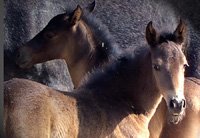
Our latest (and longest) struggle has been over her reluctance to leave the farm. Months ago, we conquered the associated fear. What has lingered is an abiding desire to be home rather than away, presiding over her herd instead of exploring with me. This has led to many a tedious lesson in which we walk down the road, then back past the driveway and a few hundred feet in the opposite direction, back and forth, up and down, dragging her feet away from home, turning back only when directed, finally ending with ten or twenty minutes of trotting and lateral work in the round corral. Lessons like this, though critical for some horses, are not what makes me get up on the morning.

Yesterday, I spent half an hour commiserating with a friend who is struggling with the very same issue in her green mare. We considered forming a club -- the Recalcitrant Mare Owners of America -- for support. It was, at least, comforting to know that other competent trainers don't have perfect horses, either.

Besides, distantly regal or downright rebellious as she can sometimes be, Consolation and I have our moments of intimacy. Just yesterday morning, I found her caught in the fence when I went outside to feed at daybreak. She stood calmly, surveying me with her lovely, liquid eyes, as I evaluated the situation. Though unhurt, she was tangled sufficiently that wire clipping seemed the easiest way to get her loose. As Travis snipped the wire, she flinched but held steady with my hand upon her neck. Moments later, she stepped free, stiff enough to let me know she'd waited several hours for help.

Times like that tell me I've done a good job with a horse. Consolation didn't panic, but gave to pressure. She stood calmly while I, by all appearances a predator, examined her entangled legs. Once free, she waited to move until given permission, and she did so with her wits about her. All those hours of trust-building, those surges of admiration for the lovely way she moves, lesson after tedious lesson when all I could offer her was quiet firmness and consistency...all these things in the hope that one day, our many points of contact would meld into a miracle, like connecting the dots in a children's activity book to discover a hidden picture.

Yesterday, I saddled Consolation by the golden glow of late afternoon and directed her once more out the driveway. And it happened: She offered to trot.

I was so surprised that I pulled her back to a walk immediately, which was in any case the right thing to do. Energy is always welcome, but gait changes should happen only on command. As soon as my brain caught up with events, however, I asked for a trot and Consolation sprang forward. This was no hustle-forward-under-duress, but a full-on, honest-to-goodness, let's-go-see-the-world trot!

Almost a mile later, we were still going. Sure, we'd stalled to eye a few new sights, weaved a bit like drunken sailors as she explored the possibility of turning back, but we were moving forward! Happily! For the first time on a trail ride with Consolation, I was actually having fun!

If there's one thing I've learned about training horses, it's this: Don't press your luck. Get done while the getting's good. Quit while you're ahead.

And so, during a particularly joyous stretch of eager trotting, I slowed Consolation and turned her toward home. We walked a bit but trotted more, so well under control that I was free to revel in the smoothest trot I've ever had the pleasure to sit.

You know, I could deal with fifty miles of that.
______________________________________

Related Posts

Breaking Free: Training the Herdbound Horse

Where To, Ma'am: First Trail Ride on a Green Horse

Thinking it Through: Training Horses as Individuals

Moving Out: Increasing Speed and Confidence on the Trail

______________________________________

Want to read more posts like this one? We deliver!

Subscribe to The Barb Wire