I must apologize for my long absence. The stressful situation to which I've alluded in previous posts continues, and it seems that more often than not lately, I arrive home with no energy left to draft a post worth reading.
I'd be lying if I said the same stress hasn't affected my training; it has. More than once, I've given up my weeknight training plans in favor of a few hours' escape through cooking or a book. Horse training takes a great deal of emotional intensity, and I often feel I have little left to give.
And yet, I have kept on. It's well past time I updated you on my 2010 plans for the equine residents of In the Night Farm. Mind you, I've learned my lesson about setting hard and fast goals when it comes to training and endurance conditioning. Something is bound to go wrong, and having expectations too high only makes the fall too painful.
These, then, are ideals. I'll work toward them and get as far as I can, and take the pitfalls in stride. Stay tuned for updates on each of the following horses:
Inara -- As part of her purchase price, Inara is to go to her new owner with basic groundwork complete. She'll catch, lead, lunge, pick up feet, deworm, and trailer load.
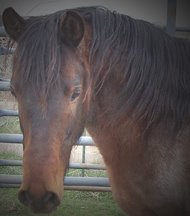
Alternating Current (aka Acey) -- It's time to start this fiery, little mare under saddle. It would be fantastic to have her ready for her first LD by the end of the season, but I'll settle for getting well into a foundation of long, slow distance work in preparation for next year.
Ripple Effect -- Can you believe she's four this year? Yes, it's time to start her under saddle, too. A significant part of the project will be getting her comfortable with leaving the other horses and facing the great, wide world.
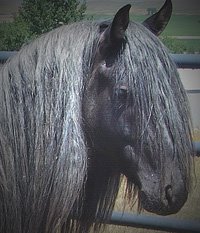
Sandstorm -- You haven't seen enough of this fantastic mare. The tallest Barb in my herd, she's an astonishing mover with a sweet but cautious personality and potential I'm just beginning to tap. I'd like to finish gentling her (she's another that arrived at In the Night Farm completely untouched) and get plenty of groundwork done so I can start riding her next year.
Consolation -- Endurance, of course! We had a setback in mid-June that has taken us out of conditioning for a while (details in an upcoming post), but it's about time to hit the trail again. Hooray!
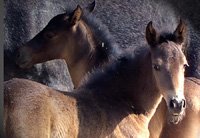
Crackerjack -- See "Ripple Effect." These half-siblings were born just a few days apart, but CJ isn't quite as physically mature as his lookalike sister. Still, it won't hurt to proceed with his groundwork as soon as I'm done with Inara to free up a time slot. Maybe, by the end of the season, it'll be time to step aboard.
I must say, it's nice to come in after a long day in the round corral, pour a tall glass of iced tea, and look out over so many sweat-stained equine backs. I know just how they feel. We're working hard, the ponies and I. We'll get there.
_________________________
By the way, I'm still encountering spam problems despite having enabled the word verification feature for comments. Sadly, this has forced me to take the next step -- comment moderation. So, you'll notice a delay between commenting and seeing your comment posted. I'll try going back to just word verification after a while, when the Chinese-character blighter decides to give it a rest.
_________________________________________________________
Subscribe to The Barb Wire
Showing posts with label Crackerjack. Show all posts
Showing posts with label Crackerjack. Show all posts
Sunday, July 11, 2010


Saturday, July 25, 2009
Fit to Ride, Part Six: Milk Got You?
One of my many, annoying traits is curiosity. I am intensely, incessantly curious about almost everything. Fortunately, I am also on the shy side -- a characteristic that spares the rest of the world from what would otherwise be my natural tendency to behave like an overgrown three year old, tugging their sleeves and insisting on knowing, "Why? Why? Why?"
The downside of inquisitiveness is that there will never be enough time for me to cover all the material that interests me. The upside is that I can still cover quite a bit and put it to good use. Nutrition and fitness, perennials in my self-guided researches, offer myriad opportunity for testing theories on my favorite guinea pig -- myself. Over the past few years, I've intensified my focus on these issues and made discoveries that led to dietary changes that most of society considers fringe at best -- and often downright barmy.
Well. Call me crazy if you like, but there's no question that I'm leaner, stronger, and fitter today, at thirty-one, than I've been since the day I was born. Good thing, since I believe that as an endurance rider, I'm honor-bound to be every bit the athlete I ask my equine partner to be.
I've already shared three of the significant, dietary shifts I've implemented, in the form of three rules for eating clean. These are the non-negotiables:
As I said before, Eating Clean Rule #1 is almost enough, all by itself. Remove all barcoded (that is, processed) "foods" from your diet, and you'll be left with the fuels your body was designed to ingest: Vegetables, fruits, meats, grains, dairy, eggs, nuts, seeds, and plant oils. If 95% or more of your daily intake comprises these foods, you'll be better off than 95% of Western civilization.
However, for those who are really serious about eating clean and getting lean, there are many issues among these non-barcoded foods that merit discussion. I'll touch the surface of the most prominent here, then hook you up with sources for additional research. Let's start with dairy:
 Now, I just included dairy in a list of foods our bodies are designed to ingest, and so they are...or at least, they were. But when was the last time you saw a yearling foal nurse? A three-month old kitten? A six-month-old lamb?
Hmm. Seems they grow out of it. In fact, a little research reveals that their bodies -- and ours -- are clearly meant to grow out of it. Lactase, the enzyme that enables digestion of lactose, ceases to be produced in animals over weaning age. Continued consumption of milk, formerly the perfect food for Junior, thereafter results in gastrointestinal distress ranging from bloating to diarrhea.
Many of you know exactly what I'm talking about; those who don't are the lucky (?) recipients of a mutant gene that permits continued lactase production. Being one-quarter Swedish, a heritage that predisposes me to said mutant gene (and perhaps a few others as well), I am not lactose intolerant -- unlike about 25% of the U.S. population and 75% of people whose heritage is African, Asian, or American Indian.
But, I still avoid dairy.
Why? Well, let's go back to our fellow mammals: How often do you see a rat drinking hamster milk, a bear cub nursing from a cougar, or a goat suckling a fawn? Yes, photos of such anomalies make their way around the web periodically. The last one I saw involved a mama dachshund and a litter of piglets. (Or was it the other way around?) Regardless, the only reason photos like that are so popular is that cross-species nursing is downright weird!
Surely I'm not the only one who finds it bizarre that we humans habitually consume large quantities of a substance custom-made to transform an 80-pound calf into a 1,800-pound bull. (And we're supposed to believe that drinking milk will make us lose weight? Excuse me?)
Besides that, the vast majority of the dairy products in your local grocery store are highly processed remnants of what might once have been a marginally acceptable food. Factory farms don't squeeze milk right out of the cow and into a carton, you know. Not by a long shot. First, they heat the milk to kill off bacteria (including the beneficial kind), a process which also reduces its vitamin A, C, D, and E content and destroys B6 and B12 outright. Then, they force it through a strainer with tiny holes, breaking up the fat molecules to prevent separation -- and bastardizing the natural hormonal delivery system of the milk, whose steroids and proteins are now able enter the bloodstream in a manner that nature never intended, triggering unnatural growth the body is unable to control.
Sounds to me like a recipe for cancer.
Those are just a few of the crazy reasons I rarely consume dairy. Feel free to pop a couple Lactaid pills, fetch a bowl of (barcoded, sugar-laden) ice cream, and take potshots at them at your leisure. When you're finished, I dare you to go read this series over at Fitness Spotlight. Allergens, antibiotics, and osteoporosis, oh my! (If you're horrified at the prospect of sacrificing dairy, be sure to check out the section on raw milk, wherein you may find some consolation. The nuances of aged dairy products such as yoghurt and cheese may interest you, as well.)
Okay. Take a moment to digest the truth about milk -- which, thanks to the Dairymen's Counsel and its well-funded friends in government, may be even more difficult than digesting the milk itself -- and in the next post, we'll move on to meat and eggs. (Don't worry. I promise not to advocate giving them up.)
_________________________________________________________
Related Posts
Fit to Ride, Part One: Going for the Goal
Fit to Ride, Part Two: Vice and Advice
Fit to Ride, Part Three: Eating Clean
Fit to Ride, Part Four: Sweet Surrender
Fit to Ride, Part Five: Eating Green
Straight Sailing: Thoughts on Fitness for Endurance Riders
_________________________________________________________
Want to read more posts like this one?
The downside of inquisitiveness is that there will never be enough time for me to cover all the material that interests me. The upside is that I can still cover quite a bit and put it to good use. Nutrition and fitness, perennials in my self-guided researches, offer myriad opportunity for testing theories on my favorite guinea pig -- myself. Over the past few years, I've intensified my focus on these issues and made discoveries that led to dietary changes that most of society considers fringe at best -- and often downright barmy.
Well. Call me crazy if you like, but there's no question that I'm leaner, stronger, and fitter today, at thirty-one, than I've been since the day I was born. Good thing, since I believe that as an endurance rider, I'm honor-bound to be every bit the athlete I ask my equine partner to be.
I've already shared three of the significant, dietary shifts I've implemented, in the form of three rules for eating clean. These are the non-negotiables:
As I said before, Eating Clean Rule #1 is almost enough, all by itself. Remove all barcoded (that is, processed) "foods" from your diet, and you'll be left with the fuels your body was designed to ingest: Vegetables, fruits, meats, grains, dairy, eggs, nuts, seeds, and plant oils. If 95% or more of your daily intake comprises these foods, you'll be better off than 95% of Western civilization.
However, for those who are really serious about eating clean and getting lean, there are many issues among these non-barcoded foods that merit discussion. I'll touch the surface of the most prominent here, then hook you up with sources for additional research. Let's start with dairy:
 Now, I just included dairy in a list of foods our bodies are designed to ingest, and so they are...or at least, they were. But when was the last time you saw a yearling foal nurse? A three-month old kitten? A six-month-old lamb?
Hmm. Seems they grow out of it. In fact, a little research reveals that their bodies -- and ours -- are clearly meant to grow out of it. Lactase, the enzyme that enables digestion of lactose, ceases to be produced in animals over weaning age. Continued consumption of milk, formerly the perfect food for Junior, thereafter results in gastrointestinal distress ranging from bloating to diarrhea.
Many of you know exactly what I'm talking about; those who don't are the lucky (?) recipients of a mutant gene that permits continued lactase production. Being one-quarter Swedish, a heritage that predisposes me to said mutant gene (and perhaps a few others as well), I am not lactose intolerant -- unlike about 25% of the U.S. population and 75% of people whose heritage is African, Asian, or American Indian.
But, I still avoid dairy.
Why? Well, let's go back to our fellow mammals: How often do you see a rat drinking hamster milk, a bear cub nursing from a cougar, or a goat suckling a fawn? Yes, photos of such anomalies make their way around the web periodically. The last one I saw involved a mama dachshund and a litter of piglets. (Or was it the other way around?) Regardless, the only reason photos like that are so popular is that cross-species nursing is downright weird!
Surely I'm not the only one who finds it bizarre that we humans habitually consume large quantities of a substance custom-made to transform an 80-pound calf into a 1,800-pound bull. (And we're supposed to believe that drinking milk will make us lose weight? Excuse me?)
Besides that, the vast majority of the dairy products in your local grocery store are highly processed remnants of what might once have been a marginally acceptable food. Factory farms don't squeeze milk right out of the cow and into a carton, you know. Not by a long shot. First, they heat the milk to kill off bacteria (including the beneficial kind), a process which also reduces its vitamin A, C, D, and E content and destroys B6 and B12 outright. Then, they force it through a strainer with tiny holes, breaking up the fat molecules to prevent separation -- and bastardizing the natural hormonal delivery system of the milk, whose steroids and proteins are now able enter the bloodstream in a manner that nature never intended, triggering unnatural growth the body is unable to control.
Sounds to me like a recipe for cancer.
Those are just a few of the crazy reasons I rarely consume dairy. Feel free to pop a couple Lactaid pills, fetch a bowl of (barcoded, sugar-laden) ice cream, and take potshots at them at your leisure. When you're finished, I dare you to go read this series over at Fitness Spotlight. Allergens, antibiotics, and osteoporosis, oh my! (If you're horrified at the prospect of sacrificing dairy, be sure to check out the section on raw milk, wherein you may find some consolation. The nuances of aged dairy products such as yoghurt and cheese may interest you, as well.)
Okay. Take a moment to digest the truth about milk -- which, thanks to the Dairymen's Counsel and its well-funded friends in government, may be even more difficult than digesting the milk itself -- and in the next post, we'll move on to meat and eggs. (Don't worry. I promise not to advocate giving them up.)
_________________________________________________________
Related Posts
Fit to Ride, Part One: Going for the Goal
Fit to Ride, Part Two: Vice and Advice
Fit to Ride, Part Three: Eating Clean
Fit to Ride, Part Four: Sweet Surrender
Fit to Ride, Part Five: Eating Green
Straight Sailing: Thoughts on Fitness for Endurance Riders
_________________________________________________________
Want to read more posts like this one?

Sunday, March 29, 2009
Shot in the Dark: Trust

To be trusted is a greater compliment than to be loved.
~ George MacDonald
~ George MacDonald
_________________________________________________________
Want to read more posts like this one? Subscribe to The Barb Wire
Friday, November 14, 2008
Shot in the Dark: Intimacy

It is the most precious thing, to know exactly where you belong.
~ Tessie Naranjo
~ Tessie Naranjo
_________________________________________________________
Are you enjoying this blog?
Subscribe to The Barb Wire
Tuesday, November 4, 2008
Shot in the Dark: The Mutual Pledge

And for the support of this Declaration,
with a firm reliance on the protection of divine Providence,
we mutually pledge to each other our Lives,
our Fortunes, and our sacred Honor.
~ The Declaration of Independence, 1776 ~
Want to read more posts like this one? We deliver!
Subscribe to The Barb Wire
Sunday, August 17, 2008
Shot in the Dark: Mystery

The most beautiful thing we can experience is the mysterious...
He to whom this emotion is a stranger,
who can no longer pause to wonder and stand rapt in awe,
is as good as dead; his eyes are closed.
~ Albert Einstein
~ Albert Einstein
Friday, July 4, 2008
Shot in the Dark: Liberty
 Crackerjack, 2-year-old Barb colt. Photo by Lynn Fraley.
Never could an increase of comfort or security be a sufficient good
to be bought at the price of liberty.
~ Hilaire Belloc
to be bought at the price of liberty.
~ Hilaire Belloc
Monday, March 24, 2008
CJ Takes the Trailer: Trailer Loading
You may recall that, upon arrival of our new-to-us horse trailer, we put CJ in a pen and started feeding him inside the trailer. The idea was for him to teach himself to load at his own pace, with a built-in reward. You want dinner, have at it -- it's in the trailer.
I like this method because it is so non-threatening that it tends to result in horses who view the trailer as a hay dispenser rather than a horse-eating monster. It works great on a lot of individuals, but CJ is not one of them. Maybe someone let slip that trailer loading is step one in Operation Geld CJ.
Anyway, the poor kid spent three days eating only the hay he could reach by crowding up to the back of the trailer and craning his neck. Finally, Travis and I decided it was time to give him some help.


I like this method because it is so non-threatening that it tends to result in horses who view the trailer as a hay dispenser rather than a horse-eating monster. It works great on a lot of individuals, but CJ is not one of them. Maybe someone let slip that trailer loading is step one in Operation Geld CJ.
Anyway, the poor kid spent three days eating only the hay he could reach by crowding up to the back of the trailer and craning his neck. Finally, Travis and I decided it was time to give him some help.
Out of deference to my sore ankle, we chose to use a lower-contact method than I would normally favor. Instead of leading CJ up to the trailer and "sending" him in as usual, we hoped waving a lunge whip behind him would give him a sufficient mental boost to step up.
No go. You'd have thought the open trailer door was a wall of fire. We quit the whip-waving routine before CJ could learn that blasting past the whip "barrier" was a perfectly feasible option.

Take three.
I haltered CJ and threaded a soft, cotton lunge rope from his halter through the trailer. Then, from outside the trailer (because sharing a narrow space with a nervous horse is not my idea of a good time), I led him in with a series of carefully-timed pressures and releases. He hopped in -- all four feet on the first try -- and settled to eating.

A few minutes later, I led him out again. He apparently thought he was jumping off a cliff.

But after a few tries, he was backing out like a pro.

I removed the halter, gave him a scratch, and watched while he turned back to the trailer and got in on his own.
Mission accomplished.
Friday, March 21, 2008
Does This Horse Make My Butt Look Big?: Horse Coat Color
A word of advice: Do not, under any circumstances, let your husband take photos for your blog. This could happen to you.


While we're examining CJ's tush, have a look at these photos and feel free to guess what color the little guy is. The photo on the left was taken at 20 months; the one on the right, at 30 days.
His sire is grulla, and his dam is gray (born black/summer black, or possibly very dark bay). His topside grandsire was grulla and granddam black. On the bottom, his grandsire was black and granddam gray (birth color unknown.) Other horses in his lineage include a bay, a liver chestnut, a blue roan, more blacks and summer blacks, and more grays.
Below is another 30-day photo. More current photos may be seen in this post. A few resources to help include EquineColor.com, which does a nice job of explaining the basics of color genetics in horses; Batty Atty Acres' color articles, which include good photos of more unusual colors; and this Horse Colors site, which offers some very helpful photos, if you can put up with all the annoying ads.


While we're examining CJ's tush, have a look at these photos and feel free to guess what color the little guy is. The photo on the left was taken at 20 months; the one on the right, at 30 days.
His sire is grulla, and his dam is gray (born black/summer black, or possibly very dark bay). His topside grandsire was grulla and granddam black. On the bottom, his grandsire was black and granddam gray (birth color unknown.) Other horses in his lineage include a bay, a liver chestnut, a blue roan, more blacks and summer blacks, and more grays.
Below is another 30-day photo. More current photos may be seen in this post. A few resources to help include EquineColor.com, which does a nice job of explaining the basics of color genetics in horses; Batty Atty Acres' color articles, which include good photos of more unusual colors; and this Horse Colors site, which offers some very helpful photos, if you can put up with all the annoying ads.

The Stars of Our Show: Barb Horses at In the Night Farm
A fellow blogger at Global Horse Culture recently expressed the hope that I would share more about how we chose our Barbs. This, I suspect, is a two part request: First and most important is the question of why we prefer the International Barb Horse Registry (IBHR) horses as preserved by Robert Painter of Quien Sabe Ranch. Second, what drove our selection of the seven individuals that comprise our little breeding program here at In the Night Farm?
Because it is Friday and I remain in a funk about my sprained ankle, I'll address the simpler question first -- why did we choose these particular Barbs?
Selecting horses from the Quien Sabe herd isn't as easy as looking down a list of available horses, marking the most interesting on the basis of bloodlines or price or what have you, then taking those animals for a test drive. You see, very few horses on the ranch are gentled at all, let alone halter broke or started under saddle. The herd, seperated in various ways by age and/or gender, runs essentially wild on over 400 acres near Midvale, Idaho. Extensive wandering on diverse footing wears their hooves beautifully, strengthens muscle and bone, and sharpens their wits.
Visitors may walk among the horses, but few members of the herd allow themselves to be touched. Those that do -- often, the boldest two-year-olds -- extend elegent necks to flutter nostrils against outstretched fingertips before retreating, all snort and prance, among their fellows.
Travis and I had the advantage of spending a great deal of time at the ranch, observing the herd that numbered around 200 head, absorbing tales of their ancestors, and watching the young horses mature. When we moved back to the Treasure Valley, we brought with us five Barbs.


 Alternating Current, better known as Acey, is a 2003, bay rabicano mare by Marawooti out of Chiripa. I haven't measured her recently, but I'd venture a guess that as our smallest Barb, she's topped out at 13 hands. Fine-featured and adorable under a great puff of forelock (see the photo at the bottom of this post), Acey stood out among the other Quien Sabe fillies for her alertness, petite but sturdy and balanced conformation, and an alluring, undefinable charm. Friendly and sensible, she's a pleasure to train and should be well started under saddle by Fall 2008.
 Sandstorm, the lovely grulla featured in our blog header, is a 2003 mare by IBHR foundation stallion Lancelot out of Sands of Time. Very like her sire, Sandstorm is quite cautious, though not exactly "spooky," and eager to comply once assured that she won't be harmed. I'm still in the early phases of gentling Sandstorm, but I suspect that once I have her trust, she'll come along very quickly indeed. I look forward to the day I can sit aboard the sailboat-smooth and lightening-fast extended trot that first attracted my attention at the ranch.
When Consolation and Acey came to In the Night Farm, both were in foal to Jack's Legacy of Quien Sabe Ranch. Anyone familiar with Spanish Mustangs will recognize in Legacy the trademark color and mane of his sire, Jack Slade. (Note: Although the Spanish Mustang Registry (SMR) includes a number of horses we believe to be Barbs, an examination of SMR stock reveals a broader spectrum of types than is included in the IBHR. In the Night Farm's Barbs are IBHR registered and although they share bloodlines with some SMR horses, our horses should not be considered Spanish Mustangs.)
 CJ is especially eye-catching, and it may just break my heart to have him gelded this spring. However, I am determined to enjoy our Barbs as well as preserve and promote them, and In the Night Farm is fortunate to have two very nice stallions already. Outstanding in physique and personality, CJ is poised for a career as one of the finest geldings on the endurance trails.

Ripple Effect retains the lovely Marawooti head of her grandsire. Indeed, she looks so much like her dam that I often mistake them for one another when feeding before dawn. Inquisitive, bold as brass, generous, sweet-natured, and honest, Ripple ought to make a high quality riding horse, as well as a source of the Jack Slade line in our herd.
And there you have it, a summary of our precious herd. In a later post, I'll address the reasons for In the Night Farm's commitement to promotion and preservation of the IBHR Barbs.
Because it is Friday and I remain in a funk about my sprained ankle, I'll address the simpler question first -- why did we choose these particular Barbs?
Selecting horses from the Quien Sabe herd isn't as easy as looking down a list of available horses, marking the most interesting on the basis of bloodlines or price or what have you, then taking those animals for a test drive. You see, very few horses on the ranch are gentled at all, let alone halter broke or started under saddle. The herd, seperated in various ways by age and/or gender, runs essentially wild on over 400 acres near Midvale, Idaho. Extensive wandering on diverse footing wears their hooves beautifully, strengthens muscle and bone, and sharpens their wits.
Visitors may walk among the horses, but few members of the herd allow themselves to be touched. Those that do -- often, the boldest two-year-olds -- extend elegent necks to flutter nostrils against outstretched fingertips before retreating, all snort and prance, among their fellows.
Travis and I had the advantage of spending a great deal of time at the ranch, observing the herd that numbered around 200 head, absorbing tales of their ancestors, and watching the young horses mature. When we moved back to the Treasure Valley, we brought with us five Barbs.
Insider, our 2000 Barb stallion by Idaho Night Hawk out of Chispa, was the first to be chosen. If you ever meet him in person, you'll understand my immediate attraction to this horse. He is lovely in every way -- at 13.3 hands, he's well-muscled and strong -boned, kind-eyed, and possessed of an enviable double mane. Dr. Phillip Sponen- berg, respected livestock genetics expert and author of Equine Color Genetics, met Insider and both his parents in 2006. At that time, he informed me that Insider is most likely a "purple roan," which is to say, a mahogany bay roan. In winter, Insider's coat turns a rather muddy shade of violet-brown, but in summer he is all shine and glory, speckled with dark corns (irregular spots that increase in number with age), and glinting with a coppery sheen typically associated with Akhal Tekes' metallic coats. But it was Insider's personality that attracted me most of all...perhaps because he and I are so much alike: restless, inquisitive, stubborn, determined, and formidable when crossed. And, we both appreciate a good meal.
 -boned, kind-eyed, and possessed of an enviable double mane. Dr. Phillip Sponen- berg, respected livestock genetics expert and author of Equine Color Genetics, met Insider and both his parents in 2006. At that time, he informed me that Insider is most likely a "purple roan," which is to say, a mahogany bay roan. In winter, Insider's coat turns a rather muddy shade of violet-brown, but in summer he is all shine and glory, speckled with dark corns (irregular spots that increase in number with age), and glinting with a coppery sheen typically associated with Akhal Tekes' metallic coats. But it was Insider's personality that attracted me most of all...perhaps because he and I are so much alike: restless, inquisitive, stubborn, determined, and formidable when crossed. And, we both appreciate a good meal.
Tuetano is our other stallion, born in 2002 by Fuego out of Quieta. A bay roan like most of Fuego's get, Tano stands about 14.2 and has unusually expressive eyes. At Quien Sabe, he stood out among his fellow three-year-olds as a tough and stylish colt. Upon arrival at In the Night Farm in 2006, Tano was still on the gangly side, but he has grown into a beautifully conformed representative of the Barbs. We selected him from a short list of available Quien Sabe colts, not only on his own potential, but also on the basis of his sire's exceptional quality and obvious prepotency (for more than just color). In personality, Tano is both sweeter and shier than Insider, suspicious of new activity but endlessly curious and eager to please.
Consolation, our 2002 mare by IBHR foundation stallion Arivaca out of Dove, has already been introduced in this post. She came to us as part of a barter, and I confess she would not have been my first choice from the Quien Sabe fillies her age. I'm pleased to report, however, that despite my intial misgivings, Consolation has blossomed into what is arguably our finest mare and a stellar example of the breed. Her training continues to progress and I'm looking forward to her first Limited Distance race in 2008.
 Alternating Current, better known as Acey, is a 2003, bay rabicano mare by Marawooti out of Chiripa. I haven't measured her recently, but I'd venture a guess that as our smallest Barb, she's topped out at 13 hands. Fine-featured and adorable under a great puff of forelock (see the photo at the bottom of this post), Acey stood out among the other Quien Sabe fillies for her alertness, petite but sturdy and balanced conformation, and an alluring, undefinable charm. Friendly and sensible, she's a pleasure to train and should be well started under saddle by Fall 2008.
 Sandstorm, the lovely grulla featured in our blog header, is a 2003 mare by IBHR foundation stallion Lancelot out of Sands of Time. Very like her sire, Sandstorm is quite cautious, though not exactly "spooky," and eager to comply once assured that she won't be harmed. I'm still in the early phases of gentling Sandstorm, but I suspect that once I have her trust, she'll come along very quickly indeed. I look forward to the day I can sit aboard the sailboat-smooth and lightening-fast extended trot that first attracted my attention at the ranch.
When Consolation and Acey came to In the Night Farm, both were in foal to Jack's Legacy of Quien Sabe Ranch. Anyone familiar with Spanish Mustangs will recognize in Legacy the trademark color and mane of his sire, Jack Slade. (Note: Although the Spanish Mustang Registry (SMR) includes a number of horses we believe to be Barbs, an examination of SMR stock reveals a broader spectrum of types than is included in the IBHR. In the Night Farm's Barbs are IBHR registered and although they share bloodlines with some SMR horses, our horses should not be considered Spanish Mustangs.)
In July 2006, Crackerjack, aka "CJ," (colt, Jack's Legacy x Consolation) and Ripple Effect (filly, Jack's Legacy x Alternating Current) were born just three days apart. Beneath the awkwardness of youth, both show every sign of developing into lovely horses indeed.
CJ is especially eye-catching, and it may just break my heart to have him gelded this spring. However, I am determined to enjoy our Barbs as well as preserve and promote them, and In the Night Farm is fortunate to have two very nice stallions already. Outstanding in physique and personality, CJ is poised for a career as one of the finest geldings on the endurance trails.
Ripple Effect retains the lovely Marawooti head of her grandsire. Indeed, she looks so much like her dam that I often mistake them for one another when feeding before dawn. Inquisitive, bold as brass, generous, sweet-natured, and honest, Ripple ought to make a high quality riding horse, as well as a source of the Jack Slade line in our herd.
And there you have it, a summary of our precious herd. In a later post, I'll address the reasons for In the Night Farm's commitement to promotion and preservation of the IBHR Barbs.
Wednesday, March 19, 2008
Of Mighty Mice and Men
 A couple weeks ago, while out riding Aaruba, I met a nice gentleman who lives atop a hill some two miles from In the Night Farm. We talked long enough to learn that we shared a few acquaintances, some training philosophies, and a love of horses. When he mentioned that he's in the process of selecting a stallion for a 2008 breeding to his bay Quarter Horse mare, I invited him to come have a look at Insider and Tuetano.
Three days later, he showed up aboard the bay mare and spent an hour on a casual tour of our place. Having heard positive reports about the Barbs' athleticism and trainability, he was eager to learn more. We discussed the Barb's skeletal structure and conformation, including his short back with exactly five lumbar vertebrae (rather than the usual five-plus-fused-piece or six), round cannon bones (rather than oblong), deeply muscled loins, uphill build, low set tail, and sub-convex profile resulting in large airway capacity.
Though favorably impressed by the stallions' conformation and demeanor, my neighbor repeatedly expressed surprise at the small size of the Barbs, which generally fall between 13.2 and 15 hands and mature slowly, often not reaching their full height until age five or older. He seemed to think that horses with a reputation for toughness ought to be tall and bulky, and his reaction to Insider, who stands just 13.3, was typical: "Well, if I wanted to breed for a kids' horse..." I hear it all the time -- but only from people who haven't seen the big horse inside the little body!
 Don't get me wrong. I think my neighbor is a pretty good horseman. He is, however, yet another victim of the "bigger is better" epidemic that has swept America. The epidemic isn't restricted to fast food menus and SUV's -- it affects our horses as well.
I prefer the ancient, light breeds, particularly the Barb and Arabian. Though small and slow-growing, they can carry a relatively high weight for their size, not least because they're hauling around less of their own bulk. Those bred for performance rather than the "halter look" tend to be athletic, with a lot of bone and large hooves relative to their size. They rarely suffer the hoof, joint, and back problems so common among today's Quarter Horses and Warmbloods. Many factors are at play in such deficiencies -- the futurity/racing trend of starting massive but skeletally immature two-year-olds under saddle, breeding for appearence rather than performance, and the practice of hastening growth by means of selective breeding and excessive nutrition, just to name a few.
Surely nature never intended near-adult weight to hang on a baby equine's frame. Nevertheless, my neighbor was shocked to see my 20-month-old Barbs (including CJ, whose photos accompany this post) at the approximate height of, and lower weight than, a Quarter Horse yearling. Imagine his incredulous tone. "These are two-year-olds?"
 "Five years from now," I wanted to say, "let's test your 2006 foals against mine. You choose the discipline -- reining, cutting, endurance, jumping, polo, dressage -- and you'll see what these itty-bitty Barbs can do...barefoot and on a diet of hay alone."
I refrained, however. My neighbor said he'd consider his options for the bay mare, and I waved him off with a smile and a promise that a half-Barb will be the best horse he's ever had -- even if it is the smallest.
Stings and Scorns
There's nothing like sitting with one foot up on my computer desk, glaring at the ice pack on my ankle. I've managed to re-injure the anterior talo-fibular ligament that I tore while playing tennis in college. Marvelous.
Like most stories of this type of injury, mine is nothing dramatic. I didn't fall off a bolting horse or disregard my own safety in the midst of the perilous rescue of a trapped foal. Oh, no. I stepped out of my horse trailer. Okay, so I was scrambling out the rear escape door and over the wheel well, on a slight slope, in the morning darkness. But still.
Never mind the pain that left me crumpled beside said horse trailer for several breathless minutes, nor the foolish uphill climb to the hay shelter with the intent of continuing my farm chores, nor the nauseated collapse on the hay that preceded a painstaking descent to the house, where Travis supplied me with pillows, ice, and comfort. I'd gladly suffer the pain again, many times over, to have back the six weeks of training and conditioning time this injury is likely to cost me.
After four years of hard work and planning, this is supposed to be the season it finally pays off. According to my Training Tracker, I'm supposed to ride Aaruba in three LD's and one 50-mile endurance race. I'm supposed to get Consolation under saddle and in her first LD, and Acey under saddle as well. Is there any particular reason, I ask, that I must be injured now?
Not everyone is empathetic. Already, I had to disabuse a co-worker of the notion that an sprained ankle is no big deal, because obviously it won't affect my ability to sit on a horse. Uh-huh. I suppose he's also one of those people who believes that riding is easy because "the horse does all the work." These days, I respond to that particular observation with a reply borrowed from another horseperson. "Oh yes," I agree. "It's just like skiing. You know, because the hill does all the work."
Incidentally, the horse trailer out of which I was climbing is a new addition to In the Night Farm. Originally a gooseneck, 4-horse straight load, it has been converted to a stock-type trailer. Travis located it on Craigslist and drove to Phoenix, Oregon to pick it up just last weekend. I was crawling around it it at 5:30 Tuesday morning because we currently have it set up with an adjacent pen so that Crackerjack aka "CJ" (2006 Barb colt, Jack's Legacy x Consolation) can train himself to load by climbing inside to eat his hay. I took the accompanying photo Sunday afternoon as CJ checked out the new arrangement.
Right now, that's about all the training I am able to do. I hope it isn't long before I can ditch the aircast, to which I should be grateful because it enables me to walk, in favor of the sturdiest brace that will fit inside my boots. I'm guessing a minimum of three weeks will pass before I can resume groundwork with the Barbs -- and probably at least twice that long before I should. It's not the end of the world, I suppose, but that's how it feels.
Please pass the Kleenex.
Like most stories of this type of injury, mine is nothing dramatic. I didn't fall off a bolting horse or disregard my own safety in the midst of the perilous rescue of a trapped foal. Oh, no. I stepped out of my horse trailer. Okay, so I was scrambling out the rear escape door and over the wheel well, on a slight slope, in the morning darkness. But still.
Never mind the pain that left me crumpled beside said horse trailer for several breathless minutes, nor the foolish uphill climb to the hay shelter with the intent of continuing my farm chores, nor the nauseated collapse on the hay that preceded a painstaking descent to the house, where Travis supplied me with pillows, ice, and comfort. I'd gladly suffer the pain again, many times over, to have back the six weeks of training and conditioning time this injury is likely to cost me.
After four years of hard work and planning, this is supposed to be the season it finally pays off. According to my Training Tracker, I'm supposed to ride Aaruba in three LD's and one 50-mile endurance race. I'm supposed to get Consolation under saddle and in her first LD, and Acey under saddle as well. Is there any particular reason, I ask, that I must be injured now?
Not everyone is empathetic. Already, I had to disabuse a co-worker of the notion that an sprained ankle is no big deal, because obviously it won't affect my ability to sit on a horse. Uh-huh. I suppose he's also one of those people who believes that riding is easy because "the horse does all the work." These days, I respond to that particular observation with a reply borrowed from another horseperson. "Oh yes," I agree. "It's just like skiing. You know, because the hill does all the work."
Incidentally, the horse trailer out of which I was climbing is a
 new addition to In the Night Farm. Originally a gooseneck, 4-horse straight load, it has been converted to a stock-type trailer. Travis located it on Craigslist and drove to Phoenix, Oregon to pick it up just last weekend. I was crawling around it it at 5:30 Tuesday morning because we currently have it set up with an adjacent pen so that Crackerjack aka "CJ" (2006 Barb colt, Jack's Legacy x Consolation) can train himself to load by climbing inside to eat his hay. I took the accompanying photo Sunday afternoon as CJ checked out the new arrangement.
Right now, that's about all the training I am able to do. I hope it isn't long before I can ditch the aircast, to which I should be grateful because it enables me to walk, in favor of the sturdiest brace that will fit inside my boots. I'm guessing a minimum of three weeks will pass before I can resume groundwork with the Barbs -- and probably at least twice that long before I should. It's not the end of the world, I suppose, but that's how it feels.
Please pass the Kleenex.
Friday, March 14, 2008
Do You Hear What I See?: Communicating with Horses
 I can't walk past a window on the north side of my house without glancing out at the horses. This frequent, subconscious check on their well-being has led to the early interception of several minor colics over the years.
Yesterday evening, I glanced out the master bedroom window just in time to see Ripple Effect (2006 Barb filly, Alternating Current x Jack's Legacy) lowering her hind hoof as if from a kick at her own belly. I paused, felt the familiar singing of my nerves as I watched her pivot and lie down to roll. Lying sternal, she turned muzzle to flank.
I reached for my boots, already ticking off a plan to gather stethoscope, thermometer, and cell phone, as she lurched back to her feet and shook dust from her mane. Looking annoyed, she twisted her neck and nipped at the point of her shoulder. My own shoulders relaxed a bit. Just an itch?
Ripple marched over to Sandstorm, who shares her paddock. The older mare reached right for Ripple's chest and raked the skin with her teeth. As Ripple's ears flopped sideways, my frown gave way to a bemused smile.
How do they do that? Sandstorm obviously understood Ripple's problem as clearly as Travis does when I say, "Just left of my spine, a little lower...ahhhh, there!"
I shouldn't be surprised. Horses are masters of communication through body language, and therein lies one of the great secrets of training. We humans, intent as we are upon our many words, too easily forget that vocalization means relatively little to an equine.
Early last year, I self-imposed a ban on nearly all verbal communication while working with horses. I made one exception for "whoa," which I like to make a part of every horse as surely as his lungs or heart or hooves are part of him, but everything else I wanted to say, I communicated strictly via the angle of my body, the slump of my shoulders or thrust of my chest, the speed of my breathing and focus of my eyes, the giving and taking of physical space.
And the world opened up. The horses responded with greater willingness and accuracy. They grew more attentive, quicker in their responses. As our relationships deepened, they seemed to read my very thoughts. I like to do a lot of liberty work in the round corral, asking for gait changes, inside and outside turns, consecutive circles off the rail, figure eights, small and large circles around me, and even spins. It is a dance in which one movement flows into the next, pulses rise, hooves pound, and our two consciousnesses merge. Often, I do no more than picture the next step and, before I give the command, the horse performs.
This is the subtlety of which horses are capable -- to see my body prepare to move while the impulse is still en route from my brain. Imagine what we could achieve if we humans were so observant!
Fortunately for us, horses are generous creatures, tolerant of our inept social skills and appreciative our our smallest successes. A few days ago, I was working with Acey when she, like Ripple, became frustrated by an unreachable itch. I obliged her with a scratch, and the resultant lick of her lips said "thank you" -- loud and clear.
____________________________
Related Posts
Outing Stress: Communicating with Horses
A Moment of Silence: Communicating with Horses
Being the Better Horse: Communicating with Horses
Enough is Enough: Communicating with Horses
____________________________
Want to read more posts like this one? We deliver!
Subscribe to:
Posts (Atom)